

GIC Green Indoor Air Quality Calculator Proposal
GBE > Projects > Calculators > G#43961
About:
GIAQC Green Indoor Air Quality Calculator (Proposal)
Context:
After 50 years in construction as a technician, architect, consultant specification writer on £2420m worth of projects, as an environmental specification consultant and in Architectural Education; BrianSpecMan Murphy has become very conscious of the knowledge gaps that exist within students, graduates, professionals and construction industry wide.
GBE Green Building Encyclopaedia, GBL Green Building Learning & GBC Green Building Calculator websites have been, are creating or planning several Design & Decision Tools (D&DT), Jargon Busters, CPD seminars and Lectures, Brain Dumps, Checklists, Issue papers, Guest Articles, etc. to try to address some of those knowledge gaps:
GBC Design & Decision tools and Carbon Calculators being developed include:
- WCL Waste Cost lite (after UK PII Funded project, complete, being replaced by GWCC)
- WBECC Whole Building Embodied Carbon Calculator (University student assignments, superseded by GBC)
- WBIUCC Whole Building In Use Carbon Calculator (University student assignments, superseded by GBC)
- GBC Green Building Calculator (During COVID, Version 2 launched, Version 3 developing)
- GRC Green Retrofit Calculator (with STBA, 99% complete)
- GIRC Green Insurance Repair Calculator (with Core Logic, Demonstration)
- GFC Green Flooring Calculator (with Gyvlon, Started)
- GIG Green Interiors Calculator (with HiiGuru, Proposal and grant application, no progress)
- GRRC Green Reclaim & Reuse Calculator (With Salvo UK, Proposal)
- GGC Green Glazing Calculator (With VacuumGlas, Substantially complete)
- GWCC Green Waste Cost Calculator (with VacuumGlas, Version 1 complete)
- GTEC Green Transport Emissions Calculator (with VacuumGlas, Substantially complete)
- GTWC Green Temporary Works Calculator (with VacuumGlas, V1 Complete)
- GHC Green Historic Calculator (with STBA & CALECHE project, Current development)
- GMEPC Green Mechanical Electrical Plumbing Calculator (with Home@ix, Started)
- GMMC Green Modern Methods Calculator (Proposal)
- GUVC Green U Value Calculator (Proposal & Feasibility underway)
- GWRRC Green Water Reduce & Recycle Calculator (Discussion starting in February 2026)
Ambition and progress:
- GBC has so far focussed on Embodied Energy & Carbon, Sequestered Carbon & LCA Life Cycle Assessment & EPD Environmental Product Declaration calculations and Bill of Quantities addressing costs.
- GBC has for a while also wanted to address EW Embodied Water and ECh Embodied Chemistry and human health.
- At exhibitions GBC’S BrianSpecMan Murphy continued to ask material & product manufacturers, IAQ Indoor Air Qualitytest kit manufacturers and consultants if we can yet find a correlation between surrounding room surfaces, material’s chemical content and indoor air quality, so far, the answers have been firm nos.
- GIC was an opportunity to address these issues, but the AI Artificial Intelligence focussed GUI Graphic User Interface, UX User Experience soaked up all the money, so no progress there.
- CALECHE Coherent, Acceptable, Low Emissions, Cultural, Heritage, Efficient, Renovation project developing tools for Historic Domestic & Non-domestic Public Building Renovation
- CALECHE addressing IAQ Indoor Air Quality with Greek and Swedish team member’s expert advice.
- The same Swedish team are also starting an IAQ funded project aiming to solve BrianSpecMan’s exhibition question.
Method Statement of Approach:
Under Greek advice we got back to Mechanical Ventilation basics
Identifying and recording: (Substantially complete)
- Local outdoor air monitoring stations and choosing closest to the building in question
- Capturing data outputs from the monitoring station
- Identify external pollution sources, pollution types, distance, direction
- Rail lines, road routes, traffic lights, airports, industrial, marine, harbours
- Further considerations: short term and temporary pollutants: (not normally considered, so far)
- Construction chemistry off gassing and products of combustion
- Agriculture chemicals and pollen
- Restaurant Kitchen extraction
- Ventilation outlets: Thermal pollution, moisture vapour, smells
- Determine if there is a pattern in the timings to pollution instances: examples:
- Food Kitchen hours of operation
- Seasonal crop spraying
- Construction Site working hours
- Appropriate response:
- Avoid air intake during these instances if practical
- Filtration to match pollution instances
- Monitoring equipment is being promoted
- It can be selected according to any known pollutants
- An output is guidance to the designers and specifiers of ventilation systems:
- Avoid drawing in external air at the time of known recurring external pollution incidences
- Building’s ventilation systems: intake, filtration methods, distribution, outlets and rooms served
- Internal pollution sources:
- Off gassing from: (Data collection pending)
- Core, surface finishes, protection, adhesives
- Modern (1957? Onwards high chemistry) furniture, upholstery (IDD advisor identified)
- Cleaning materials
- Pollution generators:
- Fireplaces, kitchen, cookers, bathrooms, laundry, etc.
- Pollution Generated:
- Mould spores, smoke, particulates, smells, VOC, CO2, heat, humidity, etc.
- Toxic smoke from materials in fires
- Example: PVC in fires generates dioxins (as do plastics in fireworks)
- Most plastics generate toxic smoke in fires
- Upholstery materials have substantial % of plastics
- Smoke is usually the killer in fires
- Smoke inhalation by fire fighters can be lethal many hours after the call out is over
- Off gassing from: (Data collection pending)
Following Swedish advice: investigate the surface materials
Continuing GBC approach looking at building fabric: and exploring the ingredients: (Substantially developed)
- Considering:
- Core materials and their distance from surface
- Surface materials
- Decoration, corrosion, fire chemical protection materials
- Impregnations, rot and fire treatments, coatings, oils, waxes
- Cleaning and maintenance materials:
- frequency of application, application rates, concentration levels
- Considering air and moisture vapour permeability of core, surface, impregnation and decoration materials
- Considering moisture transport from core to surface and direction of flow driven by hygrothermal pressure
- Consider evaporation or off gassing driven by heat
- Considering blowing agents from petrochemical plastics escaping from surfaces
- Considering multiple glass insulating gasses escaping from units
- Quantifying surface areas around spaces
- With heights calculating volumes of spaces
- Thickness and volumes of core, surface, impregnation and decoration materials
- Determining core and finish material recipes used to determine chemistry contents
- Calculating chemistry quantity available to affect IAQ
- Considering the interactions of ingredients with each other generating more unhealthy materials
- Not forgetting maintenance activities: (Pending)
- Abrasive sanding of surfaces can release micro particles (particulates) to atmosphere
- Sanding paint contributes to largest % of microplastics that are everywhere
- Drilling to add fixtures can also release micro particles
- Once released to atmosphere they risk entering the breathing tracts of any persons present
- Cleaning particles from floor should avoid flicking brushes but use vacuum suction
- Competent safe legal disposal of collected particles is essential
- Abrasive sanding of surfaces can release micro particles (particulates) to atmosphere
- Not ignoring site pollutants: (Pending)
- From prior, current and future use
- Airborne particulates pollutants landing on site
- Rainwater delivered pollutants absorbed into site
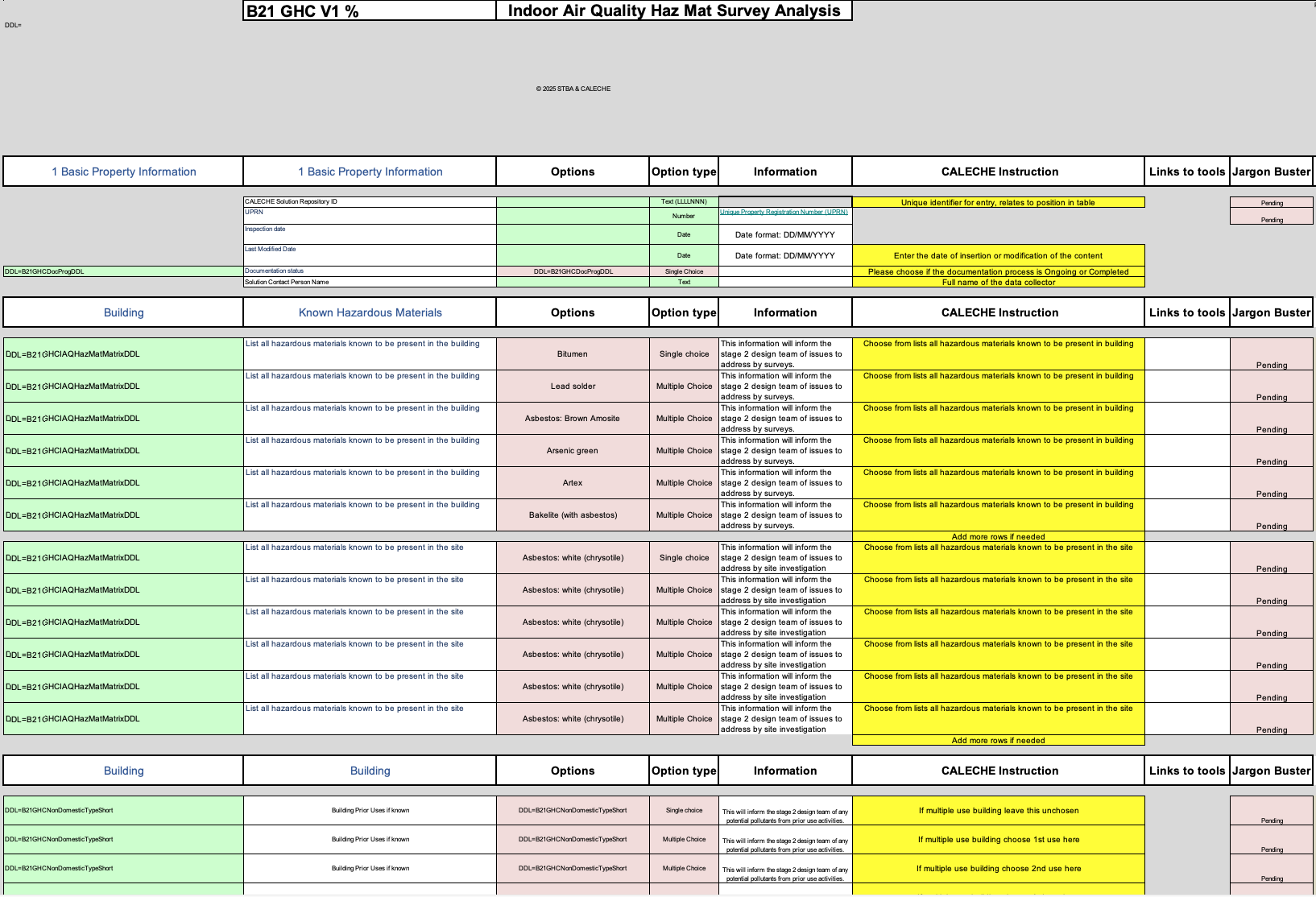
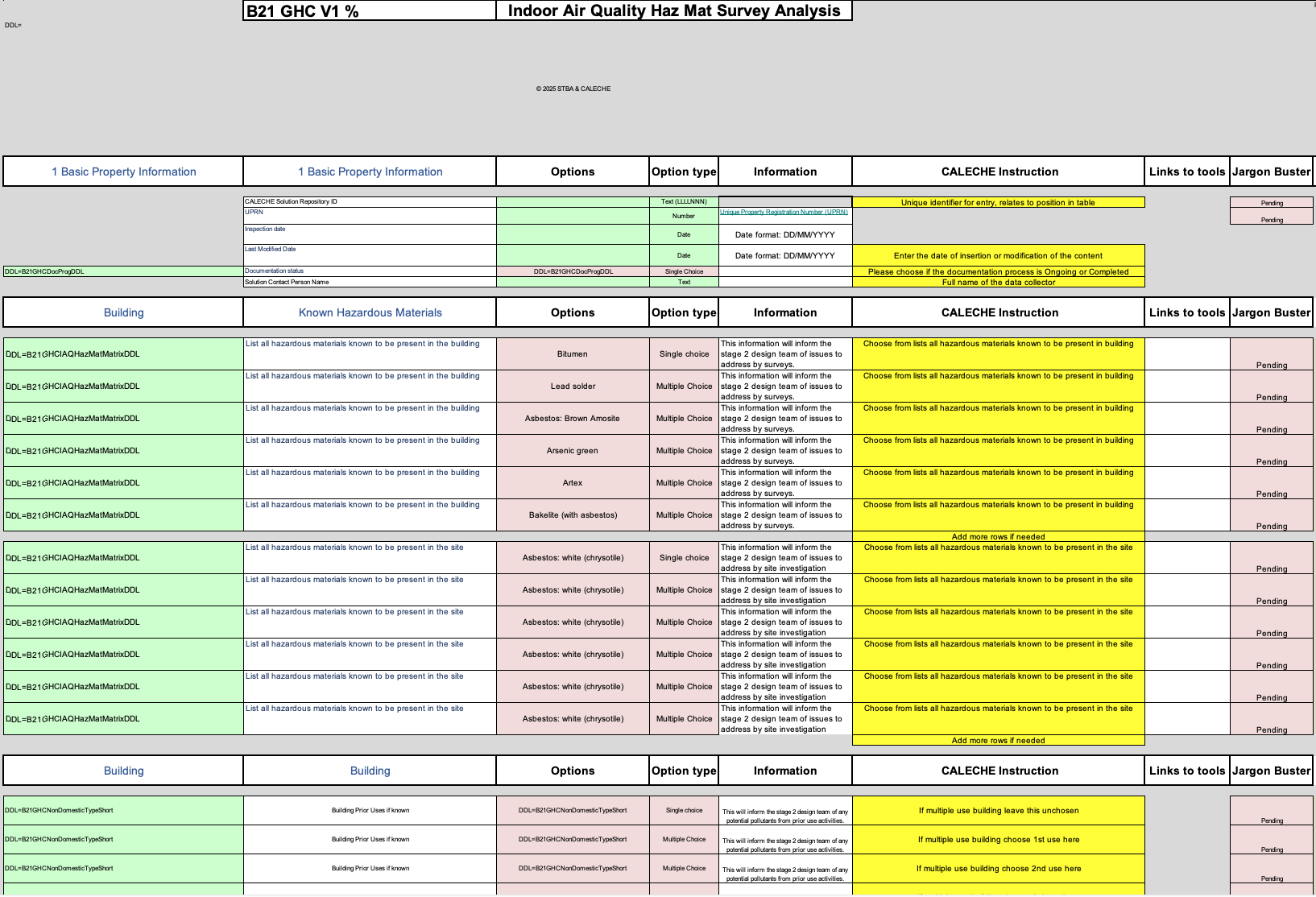
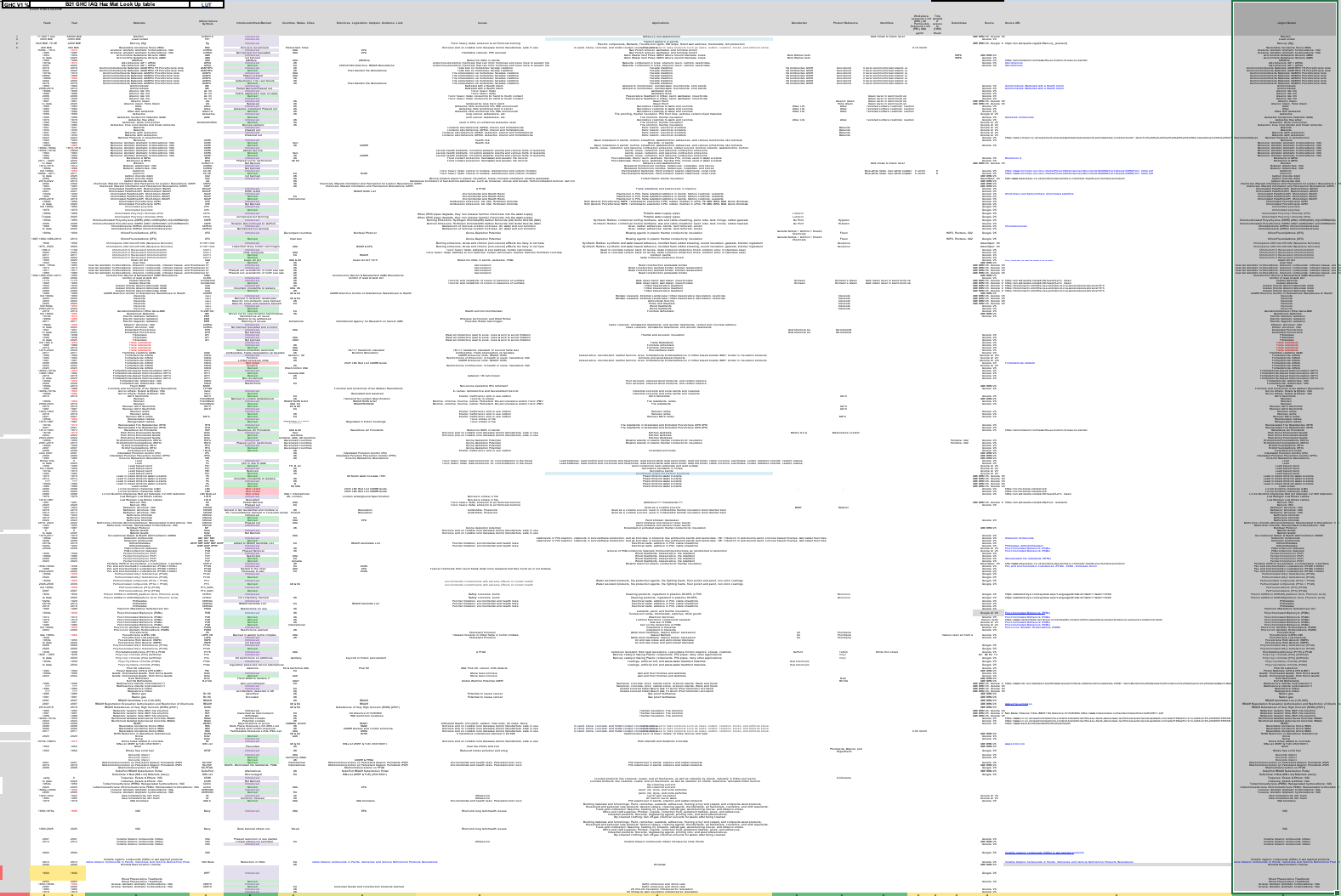
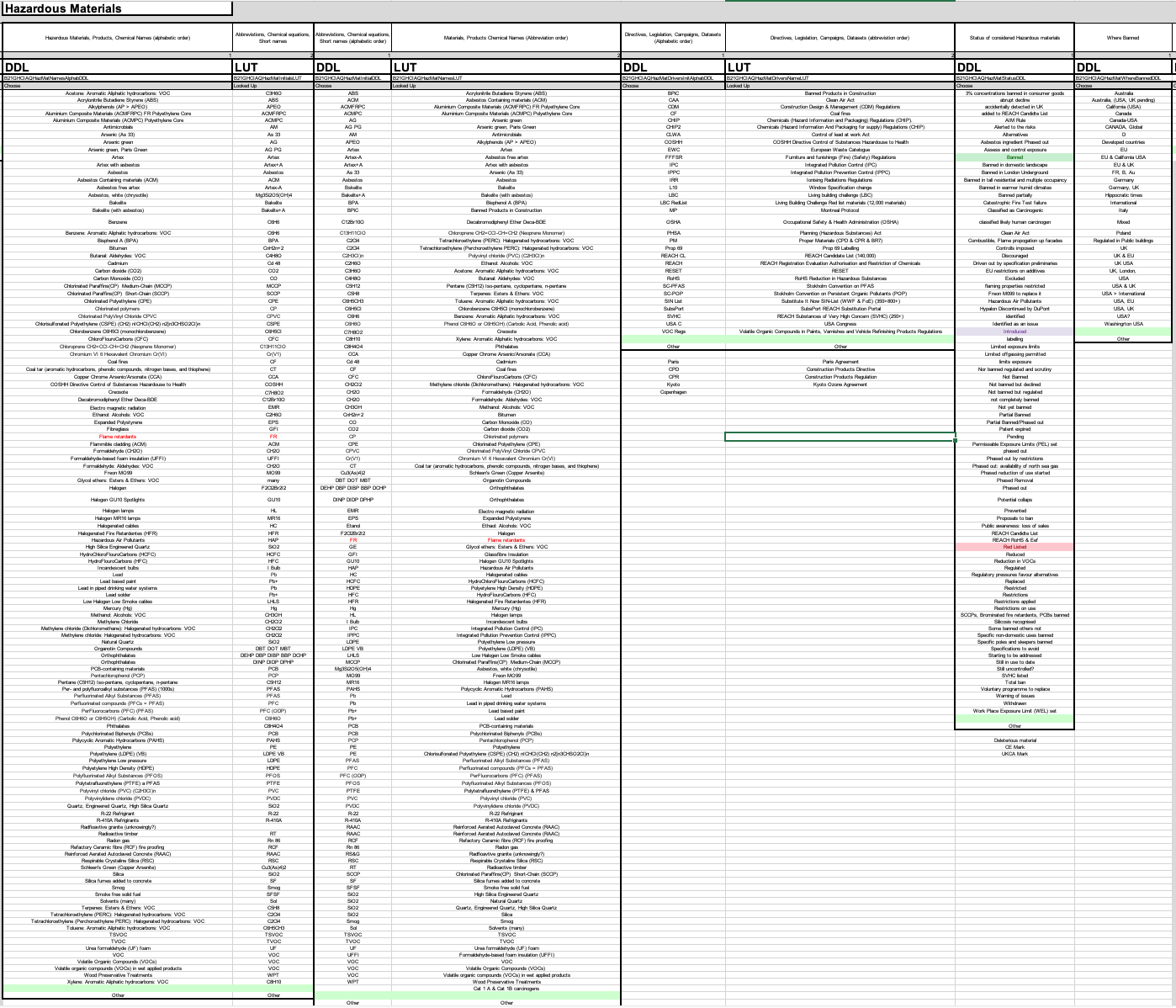
Cataloguing ingredient chemistry, materials and products that have potential to affect IAQ: (only >125 so far)
- Base on prior knowledge
- Adding recent industry priorities
- Adding current campaign targets
- Internet searches including with AI (with caution, substantially developed, but many more to capture)
- Include: Synthetic and natural solvents (e.g. plant-based oils and paints)
- Looking to Health & Safety legislation
- CHIP, COSHH,
- REACH, Candidate List, SIN Substitute it Now List, LBC Red List,
- Capturing links to data sources for users to investigate
- Consider future APIs to auto update from data sources into calculator cells
- Other guidance:
- WHO World Health Organisation, EU European Union and National regulations, many others
- Green labels, excluded materials
- Red List (>15,000 materials) below
Capture data about chemistry and material ingredients (Pending)
- From:
- Generic Material’s MSDS Material Safety Data Sheets
- Manufacturer’s Product MSDS Material Safety Data Sheets
- Manufacturer’s REACH declarations
- Manufacturer’s literature
- Maintenance & cleaning MSDS materials safety data sheets
- Material names, chemical symbol or other shorthand, initials, acronyms (Substantially developed)
- Collate Product information: Manufacturers and Product references
- Unhealthy materials
- Red Lists (see above example)
- REACH lists,
- Candidate list,
- SIN Substitute it Now list,
- SVHCs Substances of Very High Concern lists
- Alternative healthy materials to substitute
- Competent, Green & Health Labelled materials E.g. natureplus
- Declare healthy database
- Low Allergy database (UK) includes maintenance equipment
- Quiet Mark database (UK)
- REACH’s Substitute it Now lists
- REACH’s SubsPort Substitution Portal
- Information collected for:
- Design & Decision Tool
- Calculator
- Robust specifications clauses for products, for contracts
- to resist substitution for unhealthy
- to include properties (reason for choosing it and defending it in substitution scenarios)
- Map Ingredients, Materials, Products to applications
- Materials to Applications (CALECHE Generic Solutions)
- Products to Applications (CALECHE Solutions Repository)
- Map applications to Building elements, their build ups and components (to be developed)
- Map materials to applications (started)
- Collate Tell-tale signs of material presence: (started, limited data available)
- Colours
- Off gassing
- Polymer migration affecting adjacent materials, adhesive failure, discolouration, etc.
- Determine significant dates: (Substantially developed)
- when materials were introduced (if knowable)
- when materials were identified as a risk
- when materials awareness and rejection by consumers
- when materials were limited, restricted: nationally or globally
- when materials were banned
- when materials were required to be removed
- Which directives, legislations, regulations, labels initiated the changes (Substantially developed)
- Which organisations or consumers
- Which countries
- Which publications, databases or websites
- Any obligations and financial grants for removal (no progress)
- Which test kits are available in retailers (started)
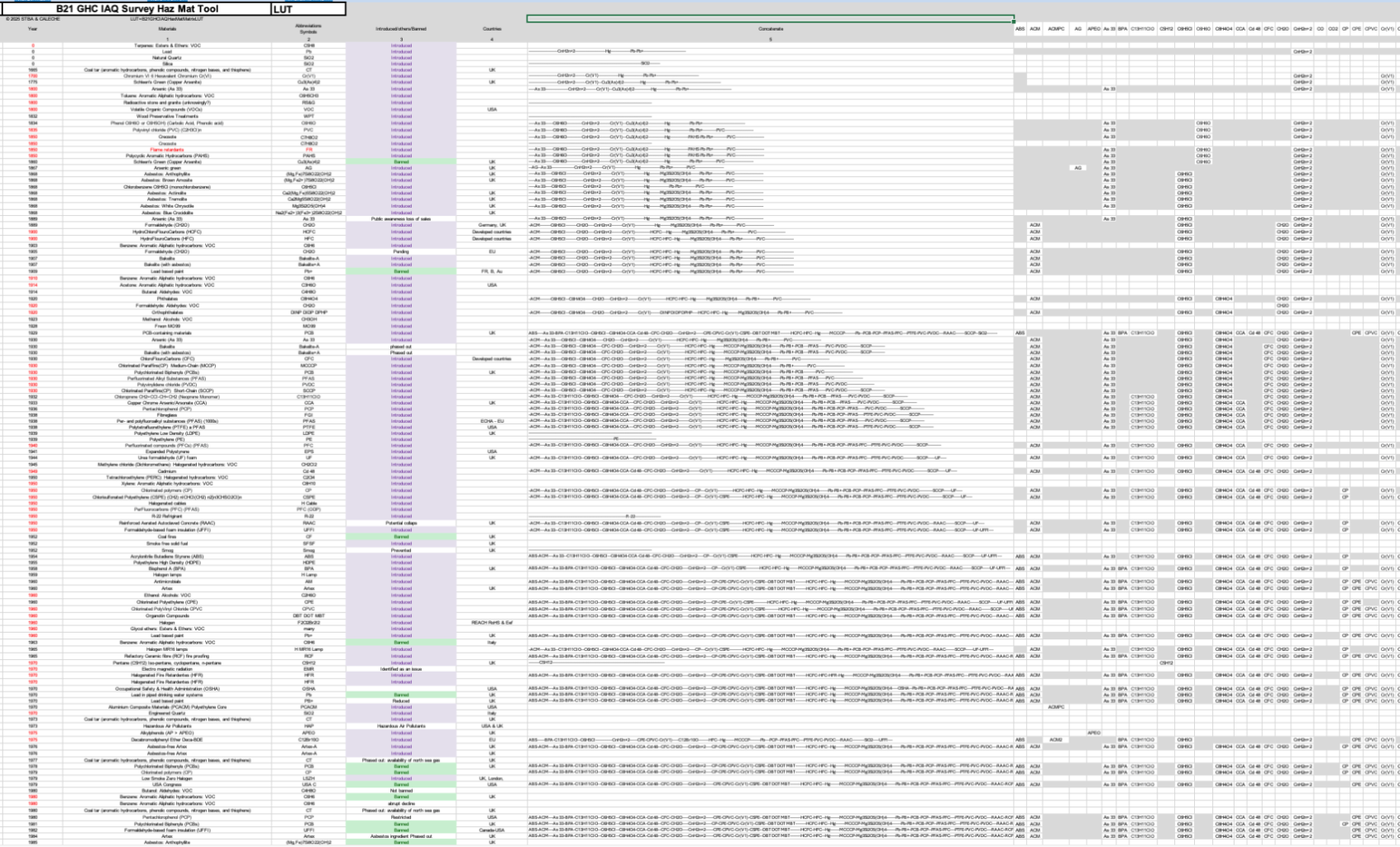
- Create Hazardous Materials Chronology (Substantially Developed)
- Map material significant dates
- Create charts to graphically show the start, change and stop dates (refinements progressing)
- Show which materials were being used in which materials and application
- Unhealthy materials
© GBE GBC GRC GIC GGC GBL NGS ASWS Brian Murphy aka BrianSpecMan ******
11th July 2026

See Also:
GBE Proposals
GBE Equations
GBE Datasets
- Generic Materials (Dataset)
- Glazing k values (Dataset)
- Insulation Materials k values (Dataset)
- Secondary Elements U values (Dataset)
- Timber Species (Dataset) G#1371 N#1351
- Embodied Energy, Carbon and Sequestered Carbon (Dataset)
- Life Cycle Assessment Environmental Product Declaration (Dataset)
GBE Calculator
- Bill of Materials Quantities Labour Costs (Calculator)
- WasteCost®Lite (Calculator) G#531 N#551
- Scale Changer (Calculator) G#19287
Calculators By Others
- Shared Earth Building Embodied Carbon (Database) G#1307 N#1298
GBE Proposal
- GBE Timber Carbon calculator (Proposal) A01BRM301014 PDF
- Timber Sector Carbon Calculator (Proposal) G#15015
- Whole Building LCA Calculator (Proposal) G#17689
GBE Jargon Buster
Initials, Abbreviations, Acronyms:
- BC
- BID
- BRE
- C
- CO2
- CO2e
- D&DT
- EC
- EChem
- EE
- FFE
- GBC
- GIC
- RICS
- SAP
- SBEM
- SC
- SCOPE
- TSB
- WRAP
- Building Embodied Carbon
- Building Embodied Energy
- Building Embodied Chemistry
- Design & Decision Tools
- GBC Green Building Calculator (Navigation) G#38828
- ICE Database (Jargon Buster) G#1018 N#1037
- Innovate UK
- Sequestered Carbon (SC)
- Technology Strategy Board (TSB)
- WasteCost®Lite (by GBC)
- Water Calculator (by AECB)
- Whole Building Calculator 2020 (by GBE)
GBE Links
- WRAP
- Innovate UK
- RIBA 2030 Carbon Challenge
- Waste Resource Action Plan (WRAP)
© GBE GBC GRC GIC GGC GBL NGS ASWS Brian Murphy aka BrianSpecMan ******
11th July 2026
