
Future of Sustainable Insulation: Natural Materials Over Plastics Guest Post
GBE > Advertise > Collaborate > Services > Guest Posts > G#42605
About:
Future of Sustainable Insulation: Natural Materials Over Plastics
As the construction industry moves towards net-zero goals and healthier indoor environments, insulation is taking centre stage in the green building movement. For decades, plastic-based insulation—such as polyurethane foam, polystyrene, and PVC products—dominated the market due to their low cost and strong thermal performance. However, their environmental toll is now impossible to ignore. From petrochemical origins to poor recyclability, these materials contribute heavily to carbon emissions, pollution, and long-term health concerns.
The shift towards natural insulation materials—renewable, breathable, and low in embodied carbon—is defining the next era of sustainable construction in the UK. This article explores how materials such as sheep’s wool, hemp, wood fibre, and cork are reshaping the future of insulation.
1. The Problem with Plastic-Based Insulation
Traditional plastic insulation materials like expanded polystyrene (EPS), extruded polystyrene (XPS), and polyurethane (PUR) are manufactured from fossil fuels. Their production involves high embodied carbon and chemical additives, which pose environmental and health risks.
Moreover, most of these products are difficult or impossible to recycle. They release harmful toxins when burned, and microplastic shedding during installation or demolition contributes to long-term pollution.
While plastic insulation offers good thermal efficiency, it often traps moisture within building envelopes—leading to condensation, mould growth, and damage to breathable historic structures, a major concern for the UK’s vast stock of older homes.
2. The Rise of Natural Insulation Materials
Natural insulation materials are gaining attention for their low embodied energy, renewability, and positive environmental footprint. They insulate effectively while also improving indoor air quality and supporting a circular economy.
Let’s explore some of the leading natural materials transforming the UK market.
a. Sheep’s Wool Insulation
One of the UK’s most locally available and sustainable options, sheep’s wool insulation is renewable, biodegradable, and highly effective.
Wool naturally regulates humidity—it absorbs and releases moisture without losing thermal performance. It also purifies indoor air by binding and neutralising harmful substances such as formaldehyde, making it ideal for homes that prioritise indoor air quality.
In addition, wool is durable, fire-resistant, and requires minimal energy to produce compared to plastic foams. At the end of its life cycle, it can be composted, returning harmlessly to nature.
Feature → Benefit correlation:
- Moisture regulation → prevents mould and condensation
- Natural protein fibres → self-extinguishing and fire-safe
- Biodegradable → reduces landfill waste
b. Hemp Insulation
Hemp is a fast-growing, carbon-negative crop that captures large amounts of CO₂ during cultivation.
Hemp insulation batts or blocks are made from the woody inner fibres of the hemp stalk, bound with natural resins. They offer excellent thermal and acoustic insulation while remaining breathable.
Hemp is naturally resistant to mould, pests, and fire, making it suitable for both modern and traditional buildings. As hemp cultivation expands across the UK, it supports local agriculture and reduces reliance on imported petrochemical products.
Feature → Benefit correlation:
- Fast-growing crop → renewable and low embodied carbon
- Vapour-permeable structure → prevents condensation
- Silica-rich fibres → enhanced pest and fire resistance
c. Wood Fibre Insulation
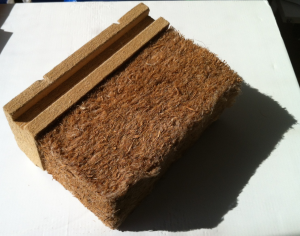
Derived from sawmill by-products, wood fibre insulation offers both environmental and performance advantages. It is vapour-permeable, enabling natural moisture regulation, which is especially crucial in heritage and timber-framed buildings.
Wood fibre insulation also contributes to carbon storage, locking in CO₂ absorbed during tree growth. When used externally as part of a solid wall system, it helps prevent thermal bridging and creates a comfortable, balanced indoor climate.
It exemplifies circular economy principles—using renewable forestry products to create materials that can be reused or biodegraded.
Feature → Benefit correlation:
- High density → thermal and acoustic stability
- Vapour open → supports building breathability
- Renewable forestry source → carbon storage over lifecycle
- Cork Insulation
Harvested from the bark of cork oak trees, expanded cork insulation boards (ECIB) represent one of the most renewable and durable natural materials.
The bark regenerates after each harvest, allowing continuous production without harming the tree. During manufacture, cork granules are heated to expand and naturally bind using their own resins—no synthetic adhesives required.
Cork insulation boards are moisture-resistant, have excellent acoustic and thermal properties, and are naturally resistant to mould and pests. As a carbon-negative product, cork stores more CO₂ than is emitted during its production and transport.
Feature → Benefit correlation:
- Expanded board format → effective thermal performance
- Closed-cell structure → water-resistant and long-lasting
- Renewable harvest cycle → regenerates without tree loss
3. Comparing Performance: Natural vs Synthetic Insulation
Some may assume natural insulation is less efficient—but modern research shows that’s not the case.
| Material Type | Typical Thermal Conductivity (W/mK) | Vapour Permeability | Carbon Impact |
| PUR / PIR (plastic foams) | 0.022 – 0.028 | Low | High (petrochemical) |
| EPS / XPS (plastic foams) | 0.030 – 0.038 | Low | High |
| Sheep’s Wool / Hemp / Wood Fibre | 0.037 – 0.045 | High | Low / Carbon-negative |
| Expanded Cork | 0.038 – 0.040 | Medium | Carbon-negative |
While plastic-based foams can achieve slightly lower thermal conductivity values, natural materials deliver better real-world performance due to their ability to regulate humidity, buffer heat, and prevent condensation. These dynamic benefits offset the numerical difference in k-values and provide superior comfort in low-energy and passive house designs.
4. The Carbon Advantage
Embodied carbon—the total carbon emitted during extraction, production, and installation—is a defining factor in sustainable construction.
Natural materials like hemp and wood fibre actively store carbon absorbed during plant growth, offsetting emissions from manufacture and delivery.
By contrast, synthetic insulation materials derived from petrochemicals are carbon-intensive from start to finish. As the UK strives to meet its Net Zero 2050 targets, specifying renewable insulation materials is among the most effective strategies to reduce a building’s total lifecycle emissions.
5. Health and Indoor Air Quality
Indoor air pollution is a growing concern. Many synthetic materials contain chemical binders, flame retardants, and off-gassing compounds that degrade air quality.
Natural insulation products, however, are generally non-toxic, creating a breathable envelope that reduces condensation and mould. Studies on indoor air quality have shown that occupants in naturally insulated buildings experience fewer respiratory issues and improved comfort compared to those in homes using synthetic foams.
6. Challenges and Opportunities
Despite clear environmental advantages, natural insulation faces hurdles in:
- Cost perception
- Availability
- Installer familiarity
Although initial costs can be higher, natural materials often outperform synthetics over time due to durability, recyclability, and improved indoor health.
The UK market is evolving fast, with BRE Environmental Profiles (EP), EPDs, and other verified data sources (not certifications of trust but factual declarations) increasing transparency and confidence.
As government policies continue to promote sustainable retrofits, natural insulation manufacturers and installers are positioned for significant growth.
7. Looking Ahead: A Circular Future
The future of insulation lies within the circular economy—designing materials and systems that can be reused, recycled, or safely biodegraded.
Natural insulation aligns perfectly with this vision. By embracing products derived from renewable sources and minimising dependency on petrochemical plastics, the construction sector can transition from “less harmful” to regenerative building practices—where construction actively restores ecological balance.
Expect to see hybrid systems combining natural materials with smart sensors to monitor temperature, humidity, and air quality—enhancing both performance and wellbeing.
Conclusion
Transitioning from plastic-based insulation to natural, sustainable alternatives represents a critical step in shaping a low-carbon, healthy built environment in the UK. These materials—renewable, breathable, and recyclable—embody the true principles of sustainability: Healthy, Environmental, Resourceful, Appropriate, Competent, Ethical, and Effective.
By prioritising natural insulation, the construction industry can lead the movement toward buildings that harmonise comfort, performance, and environmental responsibility.
Meta Details
Title: The Future of Sustainable Insulation: Natural Materials Over Plastics
Meta Description: Explore the shift from plastic-based insulation to natural, renewable materials like sheep’s wool, hemp, wood fibre, and cork — focusing on low embodied carbon, healthier indoor environments, and sustainable UK construction.
Meta Keywords: sustainable insulation, natural insulation materials, sheep’s wool insulation, hemp insulation, wood fibre insulation, cork insulation, low embodied carbon, green building UK, eco insulation, breathable insulation
GBE Team Guest Author
Name: Preeth Vinod Jethwani
- With over 5 years of hands-on experience in Guest Posting, Niche Edits, Link Building, and Local SEO.
© GBE GBC GRC GIC GGC GBL NGS ASWS Brian Murphy aka BrianSpecMan ******
16th October 2025 – 28th October 2025
Images:


Guest Author: Preeth Vinod Jethwani
© GBE GBC GRC GIC GGC GBL NGS ASWS Brian Murphy aka BrianSpecMan ******
16th October 2025 – 27th January 2026
See Also:
GBE Guest Posts
- Guest Post (Collaborate) G#40818
- Access ECO4 (Guest Post) #42579
- Sustainable Renovation Process (Guest Post) G#42350
- Digital Data Carbon Footprint (Guest Post) G# 42296
- Eco-Refurbishment: Turning Old Buildings into Energy-Efficient Homes (Guest Post) G#42642
- Circular Construction: Designing for Deconstruction and Material Reuse (Guest Post) G#42629
- Future of Sustainable Insulation: Natural Materials Over Plastics (Guest Post) G#42605
- Bio-Based Insulation and Its Role in Carbon Reduction (Guest Post) G#42658
GBE Jargon Buster
- GBE HERACEY (Jargon Buster) G#1429 N#1399
GBE Other’s Stuff
- Other’s News G#935 N#953
- Other’s Campaigns (Navigation) G#976 N#997
- Other’s Newsletters (Navigation) G#682 N#704
- Other’s Blogs G#906 N#926
- Other’s Surveys G#970 N#991
GBE Brain Dumps
- EcoHomes What does the future look like (Brain Dump) G#40732
- How to Design Sustainably (Brain Dump) G#40730
- MMC Modern Methods of Construction (Brain Dump) G#39443
- Building Performance Aspects (Brain Dump) G#21255
Template
- GBE Brain Dump (Template) G#20308
GBE Brainstorms
- House NI 1960s EnerPHit Upgrade (Brainstorm) G#16288
- Stone Barn Conversion Thermal Insulation (BrainStorm) G#14897
- Improving U values by Substitution (Brainstorm) G#13507
GBE Issue papers
- Overheating (Issue Paper) G#145
- Squashed Loft Insulation (Issue Paper) G#13919
- Indoor Air Quality IAQ (Issue) G#1119 N#1135
GBE Projects
© GBE GBC GRC GIC GGC GBL NGS ASWS Brian Murphy aka BrianSpecMan ******
16th October 2025 – 28th October 2025
