

Carbon-back Periods Guest Post
GBE > Advertise > Collaborate > Services > Guest Posts > G#42831
About:
Carbon-Back Periods: A Better Measure for Sustainable Construction
- The construction industry is under increasing pressure to demonstrate genuine environmental responsibility.
- For decades, sustainability discussions have been dominated by energy efficiency and cost reduction.
- However, energy and carbon are still too often treated as interchangeable metrics.
- They are not.
- Different materials and energy sources carry very different carbon burdens, and focusing on energy alone obscures the true environmental impact of construction decisions.
- Plastics typically have high embodied fossil carbon, high embodied energy, and high chemical content.
- Metals carry very high embodied energy, with carbon intensity varying significantly depending on extraction and manufacturing methods.
- Stone generally has low embodied energy and low carbon.
- Timber, when responsibly sourced, combines low embodied energy with the potential for negative embodied carbon through biogenic carbon storage.
- Treating these materials as equivalent on the basis of energy efficiency alone fundamentally distorts sustainability assessments.
Traditional financial pay-back periods compound this problem.
- They prioritise short-term economic return while failing to account for embodied carbon, resource depletion, material toxicity, and long-term ecological consequences. As a result, they increasingly fail to reflect what sustainable construction actually requires.
- Carbon-back periods offer a more meaningful alternative.
- Rather than asking how quickly a financial investment is recovered, carbon-back asks how long it takes for the carbon emissions invested in a material, system, or intervention to be genuinely offset through real and measurable carbon savings.
Why Pay-Back Periods Distort Sustainable Decision-Making
- Pay-back periods are accounting tools, not environmental metrics.
- They reward interventions with low upfront cost and rapid financial return, even when those interventions embed large quantities of carbon, water use, and chemistry into buildings.
- Once emitted, this embodied carbon is locked in from day one and cannot be undone.
- As operational energy demand continues to fall due to improved fabric standards and grid decarbonisation, embodied carbon now represents a growing proportion of whole-life emissions.
- Under these conditions, pay-back metrics become increasingly misleading.
- They encourage short-term efficiency gains while ignoring long-term carbon consequences, often favouring high-carbon materials that appear economically attractive but perform poorly from a whole-life perspective.
Understanding Carbon-Back Periods
- A carbon-back period measures the time required for an intervention to offset its embodied carbon through avoided emissions.
- These savings may come from reduced operational energy use, the avoidance of demolition and replacement, or the retention and reuse of existing materials and components.
- The principle is straightforward.
- If an intervention requires a large upfront carbon investment but delivers only marginal carbon savings over its lifetime, its carbon-back period may exceed its useful life.
- In such cases, the intervention cannot be considered environmentally effective, regardless of its financial justification.
- This distinction mirrors the difference between efficiency and effectiveness described in Cradle to Cradle.
- An intervention may be efficient in technical terms, but if it fails to deliver meaningful environmental benefit over time, it is not effective.
- Carbon-back analysis makes this distinction visible.
- In some cases, cost and carbon effectiveness can be achieved not by replacing systems, but by improving the performance of adjacent components.
- For example, well-designed membranes can significantly enhance insulation and airtightness performance without the carbon cost of wholesale material replacement.
Insulation illustrates this point clearly.
- Almost all insulation materials demonstrate good financial pay-back periods.
- However, insulation made from bio-based, carbon-negative materials can achieve far shorter carbon-back periods than mineral or fossil-based plastic alternatives.
- The choice of material matters as much as the act of insulating itself.
Windows and doors present a more complex case.
- As significant sources of heat loss, they have the potential for relatively short carbon-back periods.
- However, very high-performance glazing systems often have much longer pay-back and carbon-back periods due to the additional embodied energy associated with extra layers of glass, spacers, desiccants, gas fills, coatings, and larger frames.
- Triple glazing is frequently cited as a pay-back versus carbon-back dilemma.
- What is often missing from these assessments is occupant behaviour and thermal comfort.
- Improved comfort can reduce the tendency for occupants to increase thermostat settings, leading to decreased energy use and reduced carbon demand over the entire life of the building.
- When comfort is considered alongside energy performance, the carbon-back picture changes significantly.
Multifunctionality and Carbon Effectiveness
- Carbon-back analysis also highlights the value of multifunctional components.
- Where a single material or assembly performs multiple roles, both cost-back and carbon-back periods can be significantly improved.
- Building elements that provide summer and winter thermal control alongside airtightness, acoustic performance, fire resistance, and racking stability reduce the need for multiple layered systems, each with their own embodied carbon burden.
- Similarly, permeable paving systems making use of recycled demolition arisings, can deliver flood alleviation, groundwater recharge, water storage, biological water filtration and remediation, and irrigation supply, while also acting as thermal collectors for ground source heat pump systems.
- When evaluated through a carbon-back lens, such systems often demonstrate strong environmental performance that would be overlooked by narrow pay-back calculations.
Embodied Carbon and the Case for Doing Less
- Embodied carbon is generated during material extraction, manufacturing, transport, installation, and disposal.
- Unlike operational emissions, it is released immediately and irreversibly.
- New construction and material-intensive refurbishment therefore carry a carbon burden that can take decades to offset.
- Carbon-back analysis consistently demonstrates that retaining existing structures, finishes, and systems often delivers the fastest and most reliable carbon savings.
- Repair, refurbishment, and adaptive reuse frequently provide immediate or near-immediate carbon benefit because they avoid the emissions associated with demolition and new manufacture altogether.
Carbon-Back Periods and Refurbishment Strategy
- For existing buildings, carbon-back periods strongly favour minimal-intervention strategies.
- Rather than replacing components to achieve marginal efficiency gains, carbon-back thinking prioritises durability, repairability, and long-term performance.
- This is particularly relevant to the UK building stock, where the majority of future emissions reductions must come from improving what already exists.
- Carbon-back provides a practical, evidence-based framework for refurbishment decisions that avoids unnecessary material replacement and misplaced technological optimism.
Supporting the Circular Economy
- Carbon-back periods align closely with circular economy principles.
- Reuse, deconstruction, and material recovery typically deliver the lowest possible embodied carbon outcomes.
- When reclaimed materials are reintroduced into new projects, the carbon cost of their original manufacture is effectively amortised over multiple lifecycles.
- By recognising reclaimed materials as carbon assets rather than compromises, carbon-back thinking moves the industry away from linear consumption and towards genuinely circular construction practices.
Alignment with HERACEY™ Sustainability Principles
- Carbon-back periods support a broader and more robust understanding of sustainability.
- They contribute to healthier buildings by reducing reliance on high-chemistry materials, improve environmental outcomes through lower embodied carbon and water use, and encourage resourcefulness through reuse and longevity.
- Most importantly, carbon-back prioritises effectiveness.
- It asks whether an intervention delivers real, measurable carbon reduction over time, not whether it appears efficient on paper.
Data, Transparency, and Competence
- Meaningful carbon-back assessment depends on transparent, verifiable data.
- Embodied carbon values, lifespan assumptions, and performance claims must be clearly stated and open to scrutiny.
- Where data is absent, proprietary, or unverifiable, sustainability claims become speculative rather than evidence-based.
- This reinforces the importance of open datasets and competent, independent testing.
- In a post-Grenfell context, independently verified performance is essential not only for safety, but also for credible environmental assessment.
Moving Beyond New-Build Thinking
- As operational energy demand continues to fall, the environmental cost of new materials becomes increasingly difficult to justify.
- Carbon-back analysis challenges the assumption that replacement is inherently superior to retention and exposes the carbon consequences of unnecessary intervention.
- In many cases, the most sustainable solution is not a new product or system, but a considered decision to maintain, adapt, and extend the life of what already exists.
Conclusion
- Carbon-back periods provide a clearer, more responsible way to measure sustainability in construction.
- By focusing on carbon effectiveness rather than financial return, they reveal which interventions genuinely reduce emissions and which merely relocate environmental harm.
- If the built environment is to respond meaningfully to the climate crisis, carbon-back must replace pay-back as the primary decision-making benchmark.
- Sustainability is not about spending more or less. It is about achieving genuine environmental benefit with the least possible harm.
GBE Team Guest Author
Name: Preeth Vinod Jethwani
© GBE GBC GRC GIC GGC GBL NGS ASWS Brian Murphy aka BrianSpecMan ******
27th December 2025
Images:

GBE Team Guest Author
 Name: Preeth Vinod Jethwani
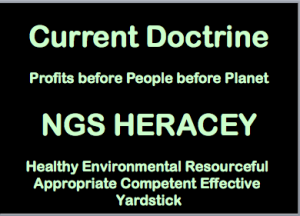
Current Doctrine v NGS Heracey(tm)
GBE HeraceyTM
© GBE GBC GRC GIC GGC GBL NGS ASWS Brian Murphy aka BrianSpecMan ******
27th December 2025 – 27th January 2026
See Also:
GBE Guest Posts
- Guest Post (Collaborate) G#40818
- Sustainable Renovation Process (Guest Post) G#42350
- Digital Data Carbon Footprint (Guest Post) G# 42296
- Access ECO4 (Guest Post) G#42579
- Future of Sustainable Insulation: Natural Materials Over Plastics (Guest Post) G#42605
- Circular Construction: Designing for Deconstruction and Material Reuse (Guest Post) G#42629
- Eco-Refurbishment: Turning Old Buildings into Energy-Efficient Homes (Guest Post) G#42642
- Bio-Based Insulation and Its Role in Carbon Reduction (Guest Post) G#42658
- Beyond Bamboo: Exploring Rapidly Renewable Materials for UK Builders (Guest Post) G#42694
- Timber Comeback: Why Engineered Wood Is the Future of Low-Carbon Construction (Guest Post) G#42699
- Hempcrete in Practice: Natural Carbon Storage for Modern Architecture (Guest Post) G#42713
- Decoding Embodied Carbon: A Practical Approach for Architects and Specifiers (Guest Post) G#42715
- Breathable Walls: The Science of Moisture-Resistant Natural Plasters (Guest Post) G#42732
- From Waste to Worth: Turning Construction Waste into Circular Materials (Guest post) G#42737
- Designing Airtight Yet Breathable Buildings: Balancing Comfort, Health and Sustainability (Guest Post) G#42769
- Passive Design Strategies for the UK Climate (Guest Post) G#42790
- Retrofitting for Net Zero (Guest Post) G#42801
- Thermal Mass Explained (Guest post) G#42812
- Reclaim, Refurbish, Reuse (Guest Post) G#42816
- The Rise of Material Passports (Guest Post) G#42818
- Circular Construction Starts With Reuse (Guest Post) G#42824
GBE Circular
- Circular Economy Action Plan(Publication) G#38180
- Circular Economy ZWS SEDA (Event) G#27448
- Cradle 2 Cradle Circular Economy New Language of Carbon G#14667
GBE HERACEY™
- GBE HERACEY (Jargon Buster) G#1429 N#1399
- GBE HERACEY Healthy (Jargon Buster) G#1896 N#1753
GBE Links
GBE Other’s Stuff
- Other’s News G#935 N#953
- Other’s Campaigns (Navigation) G#976 N#997
- Other’s Newsletters (Navigation) G#682 N#704
- Other’s Blogs G#906 N#926
- Other’s Surveys G#970 N#991
GBE Brain Dumps
- EcoHomes What does the future look like (Brain Dump) G#40732
- How to Design Sustainably (Brain Dump) G#40730
- Building Performance Aspects (Brain Dump) G#21255
- Product Data Golden Thread (Brain Dump) G#39241
- Vacuum Glazing (Brain Dump) G#42497
GBE Brainstorms
- House NI 1960s EnerPHit Upgrade (Brainstorm) G#16288
- Future Facing Environmental Bathrooms (BrainStorm) G#15701
- Stone Barn Conversion Thermal Insulation (BrainStorm) G#14897
- Improving U values by Substitution (Brainstorm) G#13507
- 3 Houses (Brainstorm) G#7851
- Semi Basement (Brainstorm) G#7393
- Sommerfield One Off House (Brainstorm) G#760 N#782
GBE Issue papers
- Overheating (Issue Paper) G#145
- Indoor Air Quality IAQ (Issue) G#1119 N#1135
GBE CPD Topic
GBE CPD Titles
- BREGG Green Materials Olympics short (CPD) G#2096 N#240
- Building with Reclaimed Materials
- Community Low Carbon Lifestyle (CPD) N#258
- Community LCL Support (CPD) N#257
- Green or Violet materials Which do you use (CPD) G#15560
- Jargon Buster Carbon Dioxide (CPD) G#291 N#292
- 57 Carbon and CO2 related terms
- Low Carbon Green Building (CPD)
- Low v High Carbon Lifestyle (CPD) N#307
- Overheating (CPD) G#15750
- RefurbishmentTSBRetrofitForAFuture (CPD) PDF Show
- Retrofit GreenDeal (CPD) N#339
- Retrofit GreenDeal Risks Rev11 (CPD) N#351
- SunSpace WinterGarden Conservatory (CPD) G#294 N#295
- TSB Retrofit for a Future Competition project
- Violet Materials (Materials) G#963 N#983
- Welsh Passivhaus case study (CPD) N#251
- Zero Carbon Development Passive Approach (CPD)
© GBE GBC GRC GIC GGC GBL NGS ASWS Brian Murphy aka BrianSpecMan ******
27th December 2025
