

Solving Construction Waste at Source Guest Post
GBE > Advertise > Collaborate > Services > Guest Posts > G#43325
About:
Solving Construction Waste at Source:
A Systems-Based Approach to Material Efficiency
Introduction: Framing the Waste Problem Precisely
- Construction waste is frequently discussed as a site-management or recycling issue.
- This framing is incomplete.
- Construction waste is primarily a design, specification, and procurement problem, not merely an operational one.
- Waste generated on site is often the visible symptom of decisions made much earlier in the project lifecycle.
- This article examines how construction waste can be systematically reduced at source, meaning prevented before materials are manufactured, delivered, or installed.
- It defines construction waste rigorously, identifies upstream causes, and outlines evidence-based strategies that address waste generation through planning, design, and material selection.
- The approach aligns with sustainable building principles that prioritise resource efficiency and whole-life environmental impact rather than downstream mitigation.
1. Defining Construction Waste
1.1 What Constitutes Construction Waste
Construction waste refers to any material brought to a construction site that is not incorporated into the final built asset. This includes:
- Off-cuts generated during installation
- Surplus materials that are excess to requirements, often over-ordered and never needed
- Damaged or defective products
- Packaging waste
- Excavated materials not reused on site
- Temporary works materials disposed of after use
This definition excludes demolition waste unless it is generated directly as part of construction-phase activities.
1.2 Why Precise Definitions Matter
- Without precise definitions, waste metrics become inconsistent and incomparable across projects.
- For example, some reporting systems include packaging waste while others exclude it, leading to misleading performance claims.
- A notable example is the exclusion of excavation waste from some datasets, such as those historically reported through BRE’s SmartWaste system, on the basis that excavation volumes were large enough to skew results.
- While this improved comparability within the dataset, it also distorted the representation of actual material flows.
- Excluding major waste streams may simplify reporting, but it undermines accurate understanding and accountability.
- Clear definitions are therefore essential for benchmarking, regulation, and informed decision-making.
2. Scale and Impact of Construction Waste
2.1 Resource Consumption
- The construction sector is one of the largest consumers of raw materials globally.
- In the UK alone, construction and infrastructure projects consume hundreds of millions of tonnes of materials annually, with tens of millions of tonnes wasted each year.
- A significant proportion of this waste arises from materials that are over-ordered and never required.
- High material throughput inherently increases waste risk, particularly when procurement tolerances are poorly defined or installation requirements are not aligned with product dimensions.
2.2 Environmental Consequences
Construction waste contributes to environmental impact in several ways:
- Embodied carbon loss: When unused materials are discarded, all emissions associated with their extraction, processing, and transport are wasted.
- Landfill pressure: Many construction materials are difficult to recycle due to contamination, composite composition, or lack of local recycling infrastructure.
- Energy and chemical inefficiency: Recycling processes often require additional energy and chemical inputs, making waste prevention environmentally preferable to recycling.
These impacts occur regardless of whether waste is landfilled or recycled, reinforcing the importance of source-level prevention.
3. Waste Hierarchy Applied to Construction
The waste hierarchy ranks waste management strategies by environmental preference:
- Prevention
- Reduction
- Reuse
- Recycling
- Disposal
In construction practice, disproportionate attention is placed on recycling, while prevention and reduction receive less emphasis. Solving construction waste at source requires a decisive shift toward the upper levels of the hierarchy, where the greatest environmental benefits are achieved.
4. Root Causes of Construction Waste
4.1 Design-Stage Decisions
Design choices strongly influence material efficiency. Common waste-generating practices include:
- Non-standard dimensions that do not align with manufactured product sizes
- Ignoring component sizes when placing openings within assemblies
- Late design changes after procurement
- Over-specification of materials without performance justification
These practices create predictable mismatches between design intent and material reality, resulting in unavoidable waste.
4.2 Specification and Over-Ordering
- Specifications often include conservative safety margins or vague allowances intended to mitigate risk.
- In practice, this frequently leads to over-ordering and surplus materials with limited reuse potential.
4.3 Procurement and Supply Chain Fragmentation
- Fragmented supply chains reduce coordination between designers, manufacturers, and installers.
- Materials are often ordered before final dimensions are confirmed.
- Rapid and accurate dissemination of revised drawings and specifications throughout the supply chain is essential.
- Failure to do so leads to incorrect materials being purchased, assemblies being fabricated incorrectly, and completed work being removed and consigned to skips and landfill.
- Effective waste prevention therefore depends on timely communication and coordinated planning.
5. Solving Waste at Source: Design-Led Strategies
5.1 Standardisation and Modular Design
- Standardisation involves designing components around consistent, repeatable dimensions aligned with manufacturing standards and product sizes.
- Modular design extends this approach by using prefabricated elements produced off site.
- Avoiding curvilinear perimeters, complex abutments, and clashing grid geometries significantly reduces off-cut waste.
- It also reduces opportunities for poor workmanship and rejection during quality inspections.
- Evidence from case studies shows that modular approaches reduce waste by:
- Increasing dimensional awareness during design
- Minimising on-site cutting and adjustments
- Enabling tighter material ordering tolerances
- Uniformity of appearance, often seen as a limitation, is in many cases desirable and supports quality control.
- Natural materials introduce additional complexity. Variations in timber grain or stone patterning can result in otherwise usable materials being rejected.
- Establishing acceptance criteria, control samples, mock-ups, and reserving materials specifically for a project can prevent unnecessary disposal.
5.2 Design for Manufacture and Assembly (DfMA)
- Design for Manufacture and Assembly (DfMA) integrates manufacturing and assembly constraints into the design process.
- By considering how components will be produced and installed, designers can eliminate unnecessary complexity and reduce waste.
- DfMA moves waste prevention upstream, where design changes are less costly and more impactful.
6. Material Selection and Specification
6.1 Material Efficiency vs. Material Substitution
Waste reduction is often framed as substituting one material for another. While material choice matters, material efficiency—using less material to achieve the same function—is frequently more effective.
Examples include:
- Optimised structural design based on calculation rather than rule-of-thumb approaches, such as unnecessarily doubling timbers around openings
- Selecting products in dimensions that closely match room sizes, such as tile modules that minimise perimeter cutting
- Choosing materials with longer service life to avoid premature replacement
Rule-based over-engineering increases both material consumption and off-cut waste while often providing no additional performance benefit.
6.2 Environmental Product Declarations (EPDs) and Waste Data
- Environmental Product Declarations (EPDs) provide standardised information on environmental impacts, including manufacturing waste and yield.
- While primarily used for carbon assessment, EPDs can also inform waste-related decisions by highlighting production efficiencies and by-products.
7. Construction Planning and Logistics
7.1 Just-In-Time Delivery
- Just-in-time (JIT) delivery reduces waste caused by damage and degradation by minimising on-site storage.
- However, UK construction has traditionally operated on a “just-in-case” basis, with materials over-ordered and delivered early.
- While consolidation centres have been trialled, they have often been abandoned where benefits accrued primarily to installers rather than construction management.
- This highlights the need to align incentives across the supply chain.
7.2 On-Site Material Management and Lean Pitfalls
- Clear allocation of storage areas, protection measures, and installation sequencing reduces accidental waste when consistently applied.
- However, poorly applied lean thinking can increase material waste.
- For example, delivering pallets of materials to each work area may improve labour efficiency, but surplus materials left behind are often discarded rather than redistributed.
- Lean principles must therefore consider material efficiency alongside labour productivity.
8. Measuring Waste Prevention Performance
8.1 Waste Intensity Metrics
Effective waste prevention requires measurement. Common metrics include:
- Kilograms of waste per square metre of floor area
- Percentage of materials wasted by mass
These metrics should be tracked by material category to identify targeted improvement opportunities.
8.2 Limitations of Recycling Rates
- High recycling rates do not indicate low waste generation.
- For example, plasterboard off-cut waste has often been assumed at 10%, while site data shows it can reach 30% or more.
- Absolute waste reduction must therefore take precedence over diversion metrics.
9. Anticipating Editorial and Industry Objections
9.1 “Waste is unavoidable in construction”
- Some waste is inevitable, but much arises from avoidable practices such as setting out modular components from the centre of a room and cutting extensively at perimeters.
- Introducing non-modular border zones can significantly reduce waste.
- Design trends also contribute. Large-format products, such as 900 × 900 mm ceramic tiles, are often specified without consideration of increased off-cut waste.
9.2 “Waste prevention increases upfront costs”
- While upstream planning requires additional design effort, this is frequently offset by reduced purchasing, handling, and disposal costs.
- Environmental performance should not be assessed solely on short-term financial metrics.
9.3 “Recycling solves the waste problem”
- Recycling manages waste after it is created. Prevention avoids embodied carbon loss entirely and remains the most effective strategy within the waste hierarchy.
10. Policy and Industry Implications
Solving construction waste at source requires systemic change, including:
- Early contractor involvement in design, with genuine consideration of their input
- Mandatory waste forecasting at planning stage
- Integration of waste metrics into sustainability assessments
- Greater transparency across material supply chains
These measures support broader goals of reducing resource extraction and environmental impact.
Conclusion
- Construction waste is not an inevitable by-product of building activity but a predictable outcome of upstream design and specification decisions.
- By addressing waste at source—through design rationalisation, material efficiency, coordinated procurement, and robust measurement—the construction sector can significantly reduce environmental impact without relying on downstream mitigation.
- Solving construction waste at source is therefore a systems challenge, requiring clearer definitions, better data, and a shift in professional priorities from remediation to prevention.
GBE Team
Guest Author
Name: Preeth Vinod Jethwani
© GBE GBC GRC GIC GGC GBL NGS ASWS Brian Murphy aka BrianSpecMan ******
2nd March 2026
Images:
GBE Team
Guest Author
 Name: Preeth Vinod Jethwani
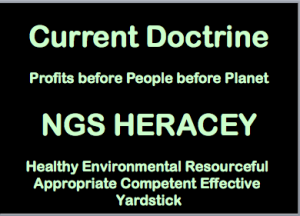
Current Doctrine v NGS Heracey(tm)

GBE HeraceyTM
© GBE GBC GRC GIC GGC GBL NGS ASWS Brian Murphy aka BrianSpecMan ******
2nd June 2023 – 2nd March 2026
See Also:
GBE Guest Posts
- Sustainable Renovation Process (Guest Post) G#42350
- Access ECO4 (Guest Post) G#42579
- Circular Construction: Designing for Deconstruction and Material Reuse (Guest Post) G#42629
- Eco-Refurbishment: Turning Old Buildings into Energy-Efficient Homes (Guest Post) G#42642
- Bio-Based Insulation and Its Role in Carbon Reduction (Guest Post) G#42658
- Beyond Bamboo: Exploring Rapidly Renewable Materials for UK Builders (Guest Post) G#42694
- Timber Comeback: Why Engineered Wood Is the Future of Low-Carbon Construction (Guest Post) G#42699
- Hempcrete in Practice: Natural Carbon Storage for Modern Architecture (Guest Post) G#42713
- Decoding Embodied Carbon: A Practical Approach for Architects and Specifiers (Guest Post) G#42715
- Breathable Walls: The Science of Moisture-Resistant Natural Plasters (Guest Post) G#42732
- From Waste to Worth: Turning Construction Waste into Circular Materials (Guest post) G#42737
- Retrofitting for Net Zero (Guest Post) G#42801
- Reclaim, Refurbish, Reuse (Guest Post) G#42816
- The Rise of Material Passports (Guest Post) G#42818
- Circular Construction Starts With Reuse (Guest Post) G#42824
- Embodied Carbon Mistakes (Guest Post) G#42864
- Refurbishment as Climate Action (Guest Post) G#42874
- Carbon-back vs Pay-back (Guest post) G#42911
- Reclaimed Reduces Whole life carbon (Guest Post) G#42916
- Calculating Embodied Carbon Without Greenwash (Guest Post) G#429__
- Low-Carbon Material Selection Using HERACEY™ Screening (Guest Post) G#429__
GBE Circular
- Circular Economy Action Plan(Publication) G#38180
- Circular Economy ZWS SEDA (Event) G#27448
- Cradle 2 Cradle Circular Economy New Language of Carbon G#14667
- The Future of Waste Management: Promoting a Circular Economy in the UK (Event) G#13817
- WRAP Demolition Module ICE Demolition Protocol (Information) G#550 N#570
- GBE Reclamation Time (Podcast) G#41960
- GBE Reclamation Hour (Event) G#40562
- Waste and Recycling DTI PII (Project) G#552 N#572
GBE HERACEY™
- GBE HERACEY (Jargon Buster) G#1429 N#1399
- GBE HERACEY Healthy (Jargon Buster) G#1896 N#1753
GBE Links
- Wikipedia
- SALVO Architectural Salvage (Link) G#1044 N#1061
GBE Other’s Stuff
- Other’s News G#935 N#953
- Other’s Campaigns (Navigation) G#976 N#997
- Other’s Newsletters (Navigation) G#682 N#704
- Other’s Blogs G#906 N#926
- Other’s Surveys G#970 N#991
GBE Brain Dumps
- How to Design Sustainably (Brain Dump) G#40730
- MMC Modern Methods of Construction (Brain Dump) G#39443
- Product Data Golden Thread (Brain Dump) G#39241
GBE CPD Topic
- CDP Topic Refurbishment Retrofit (Navigation) G#1451 N#1419
GBE CPD Titles
- Building with Reclaimed Materials
- Design To Reduce Waste (TGR Training) G#404 N#405
- Design to Reduce Waste Diagrams(CPD) G#412 N#413
- Green or Violet materials Which do you use (CPD) G#15560
- Jargon Buster Carbon Dioxide (CPD) G#291 N#292
- 57 Carbon and CO2 related terms
- Material Exchange 4 Specification (CPD) G#308 N#309
- Reclaim Product Material Passports(CPD) G#30129
- Reclaim Reuse Specification (CPD) G#316 N#317
- RefurbishmentTSBRetrofitForAFuture (CPD) PDF Show
- Retrofit GreenDeal (CPD) N#339
- Retrofit GreenDeal Risks Rev11 (CPD) N#351
- Surveys Tests Analysis (CPD Lecture) G#389 N#390
- Violet Materials (Materials) G#963 N#983
- Waste Colour Code (CPD) G#409 N#410
- Waste Containers (CPD) N#411
- Waste Cost Reduction (CPD) N#412
- Waste Distribution Centre (CPD) N#414
- Waste Hierarchy 2011 (CPD) G#414 N#415
- Waste Hierarchy 2012 (CPD) N#416
- Waste Images Skips (CPD) N#417
- Waste Refurbishment Hierarchy (CPD) N#418
GBE Navigation
- GBE Material Exchange (Navigation) G#912 N#932
- GBE Waste (Navigation) G#39823
© GBE GBC GRC GIC GGC GBL NGS ASWS Brian Murphy aka BrianSpecMan ******
2nd March 2026
