

Refurbishment as Climate Action Guest Post
GBE > Advertise > Collaborate > Services > Guest Posts > G#42874
About:
Refurbishment as Climate Action:
Reducing Carbon Without Demolition and New Build
- Climate action in the built environment is too often framed as a choice between “old and inefficient” versus “new and sustainable.”
- This false binary has driven decades of demolition followed by new build, locking vast quantities of carbon into construction processes while discarding usable buildings, materials, labour, and cultural value.
- In reality, refurbishment is one of the most effective and immediate climate actions available to the construction sector—particularly in the UK, where the majority of the buildings that will exist in 2050 already stand today.
- This article positions refurbishment as a deliberate climate strategy rather than a secondary or compromised option.
- It explores how repairing, upgrading, and reusing buildings can dramatically reduce embodied carbon, support circular economy principles, introduce climate adaptation, and deliver healthier, more resilient outcomes—without the environmental cost of demolition and rebuilding.
Why New Build Is a Carbon Problem
- New construction carries a substantial upfront carbon burden. Foundations, structures, finishes, and building services all rely on energy-intensive processes involving extraction, transport, manufacture, and installation.
- Even highly efficient new buildings begin life with a significant carbon debt—carbon that must be “paid back” over time through reduced operational emissions. In many cases, that payback period extends for decades, if it is achieved at all.
- This is fundamentally different from carbon offsetting, which attempts to compensate for emissions elsewhere rather than avoiding them at source.
- For the purposes of climate mitigation, avoiding emissions is always more reliable than assuming future offsets will materialise.
- Demolition compounds the problem. It generates large volumes of waste, much of which is downcycled, burned, or sent to landfill.
- The loss of embedded energy, associated carbon, skilled labour, and material resources is rarely accounted for in headline sustainability claims.
- Once these impacts are included, the environmental case for replacement weakens significantly.
- Refurbishment challenges this model by recognising buildings as carbon and material banks—a concept promoted by circular economy research such as the BAMB (Buildings As Material Banks) project.
- Keeping a structure standing avoids one of the most carbon-intensive stages of the construction lifecycle altogether.
Refurbishment and Embodied Carbon: The Core Advantage
The primary climate benefit of refurbishment lies in avoided embodied carbon. Every retained wall, floor, roof, and foundation represents carbon that does not need to be re-emitted.
Key advantages include:
- Avoidance of demolition emissions
- Avoiding demolition arisings being sent to landfill
- Retention of existing structural materials
- Reduced demand for new, high-carbon products
- Lower transport and logistics impacts
Unlike operational improvements, these benefits are immediate. Carbon savings occur at the point of decision-making, not over an uncertain future lifespan.
From a carbon-back perspective—how quickly climate benefit is achieved—refurbishment delivers impact when it matters most: now.
Moving Beyond “Cosmetic” Refurbishment and Introducing Climate Adaptation
One reason refurbishment is sometimes undervalued is its association with superficial upgrades: new finishes, decorative changes, or short-term improvements. Climate-focused refurbishment is fundamentally different and presents a major opportunity to integrate climate adaptation alongside mitigation.
Effective low-carbon refurbishment prioritises:
- Building fabric performance in a fabric-first scenario
- Whole House Plan (understanding the final outcome avoiding redundant and repetative work)
- Durability and repairability
- Long service life of whole building and its components
- Reduced maintenance cycles
- Resilience to overheating, moisture, and extreme weather
Replacing a functioning element simply because it looks outdated often increases embodied carbon rather than reducing it. Climate-aligned refurbishment asks more critical questions:
- Does this element still perform adequately?
- Can it be improved without replacement?
- When replacement is necessary, can it be done without affecting surrounding components?
This approach supports both carbon reduction and long-term adaptability.
Fabric First, Not Technology First
A common mistake in refurbishment projects is prioritising mechanical and technological systems before addressing the building fabric. Services do not make a building efficient; a competent, well-insulated fabric does. Services merely compensate for deficiencies.
Insulation is paid for once. Services require electricity or fuel for the entire life of the building, incur ongoing costs, and have much shorter lifespans than building fabric—adding future replacement impacts.
A robust climate strategy typically follows this hierarchy:
- Halve energy demand through fabric improvements
- Double the efficiency of services and controls
- Decarbonise energy supply
Even if stage percentages vary, ambitious end targets are essential. Combined, these measures can reduce carbon emissions by over 80%.
Fabric-first refurbishment focuses on:
- Improving airtightness using low-impact methods
- Enhancing thermal performance with appropriate materials
- Reducing thermal bridging through careful detailing rather than added complexity
These measures have low embodied carbon, long lifespans, and minimal maintenance requirements.
Circular Economy in Practice: Reclaim, Repair, Reuse
The relationship between refurbishment and the circular economy is nuanced. While circular economy models often rely on dismantling buildings to recover materials for new construction, refurbishment represents a more carbon-efficient strategy by keeping materials in use in situ at their highest value.
Refurbishment enables:
- Repairing and repointing masonry
- Repairing timber elements rather than replacing them
- Reusing existing doors, refurbishing fittings and fixtures
- Reclaiming materials for reuse in situ
- Reclaiming excess materials for adaptation elsewhere
Even in small-scale projects—such as a bathroom remodel—retaining sound layouts, effective plumbing routes, and sanitary ware can significantly reduce carbon compared to full replacement. Across an estate or thousands of projects, the cumulative impact is substantial.
Circular refurbishment also reduces reliance on virgin materials, strengthening resource security and reducing exposure to volatile supply chains.
Health and Indoor Environment Benefits
Low-carbon refurbishment often aligns naturally with healthier buildings. Retaining existing materials avoids introducing new sources of chemical emissions and indoor pollutants associated with many modern products, including “forever chemicals” found in some finishes and sealants.
Climate-conscious refurbishment typically favours:
- Low-chemistry materials
- Breathable assemblies appropriate to existing and historic fabric
- Reduced use of synthetic finishes
This supports improved indoor air quality and occupant wellbeing, aligning with principles such as HERACEY™, which link environmental performance with health and building competence.
Refurbishment vs Replacement: A Clear Decision Framework
Choosing refurbishment over demolition and new build should be based on evidence, not sentiment. Robust decision-making requires transparent criteria.
Key questions include:
- Is the existing structure fundamentally sound, or can it be made so?
- Can required performance improvements be achieved through repair and upgrade?
- What is the embodied carbon cost of demolition and replacement versus refurbishment?
- How adaptable is the building for future needs?
In many cases, refurbishment combined with selective intervention outperforms new build across environmental, social, and economic metrics—delivering lower carbon, reduced disruption, retained community value, and better long-term resilience.
The Role of Designers: From Problem Solvers to Stewards
Architectural education rarely focuses on refurbishment. It requires technical knowledge, material literacy, and construction understanding that are often under-taught. As a result, existing buildings are frequently framed as problems to be replaced rather than assets to be optimised.
Designers play a critical role in repositioning refurbishment as climate action. This involves:
- Early-stage carbon assessment that includes demolition and wasted resource impacts
- Advocacy for reuse where it delivers better outcomes
- Clear communication of long-term value beyond initial capital cost
Designers who act as stewards—of carbon, resources, and social value—are better equipped to deliver meaningful climate outcomes.
Policy, Regulation, and the UK Context
In the UK, planning and building control systems have historically favoured new development. However, climate commitments increasingly demand a shift in emphasis.
Refurbishment supports:
- National carbon reduction targets
- Reduced infrastructure demand
- Preservation of local character and identity
As embodied carbon metrics gain prominence globally—if not yet fully embedded in UK regulation—refurbishment is likely to shift from an alternative option to a default strategy, particularly in urban and suburban contexts.
Measuring Success: Beyond Energy Ratings
Traditional performance metrics often fail to capture the full value of refurbishment. Operational energy ratings ignore avoided carbon and resource preservation.
More meaningful measures include:
- Whole-life embodied carbon assessments
- Carbon-back periods rather than financial payback
- Durability and service-life benchmarks
Transparent tools that capture these factors are essential for informed decision-making.
Conclusion
- Refurbishment is not a second-best solution. It is one of the most powerful climate actions available to the built environment.
- By avoiding demolition, retaining embodied carbon, and preserving material and social value, refurbishment delivers immediate and lasting benefits that new construction often cannot match.
- Reducing carbon without demolition and new build requires a shift in mindset, metrics, and design culture.
- When buildings are treated as long-term resources rather than disposable products, refurbishment becomes not just an option—but a responsibility.
GBE Team
- Guest Author: Preeth Vinod Jethwani
- Editor: BrianSpecMan
© GBE GBC GRC GIC GGC GBL NGS ASWS Brian Murphy aka BrianSpecMan ******
10th January 2026
Images:
GBE Team Guest Author
 Name: Preeth Vinod Jethwani
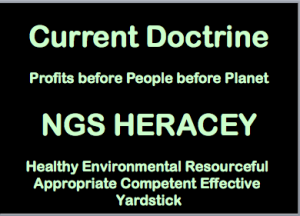
Current Doctrine v NGS Heracey(tm)

GBE HeraceyTM
© GBE GBC GRC GIC GGC GBL NGS ASWS Brian Murphy aka BrianSpecMan ******
10th January 2026 – 27th January 2026
See Also:
GBE Guest Posts
- Guest Post (Collaborate) G#40818
- Sustainable Renovation Process (Guest Post) G#42350
- Digital Data Carbon Footprint (Guest Post) G# 42296
- Access ECO4 (Guest Post) G#42579
- Future of Sustainable Insulation: Natural Materials Over Plastics (Guest Post) G#42605
- Circular Construction: Designing for Deconstruction and Material Reuse (Guest Post) G#42629
- Eco-Refurbishment: Turning Old Buildings into Energy-Efficient Homes (Guest Post) G#42642
- Bio-Based Insulation and Its Role in Carbon Reduction (Guest Post) G#42658
- Beyond Bamboo: Exploring Rapidly Renewable Materials for UK Builders (Guest Post) G#42694
- Timber Comeback: Why Engineered Wood Is the Future of Low-Carbon Construction (Guest Post) G#42699
- Decoding Embodied Carbon: A Practical Approach for Architects and Specifiers (Guest Post) G#42715
- Breathable Walls: The Science of Moisture-Resistant Natural Plasters (Guest Post) G#42732
- From Waste to Worth: Turning Construction Waste into Circular Materials (Guest post) G#42737
- Designing Airtight Yet Breathable Buildings: Balancing Comfort, Health and Sustainability (Guest Post) G#42769
- Passive Design Strategies for the UK Climate (Guest Post) G#42790
- Retrofitting for Net Zero (Guest Post) G#42801
- Thermal Mass Explained (Guest post) G#42812
- Reclaim, Refurbish, Reuse (Guest Post) G#42816
- The Rise of Material Passports (Guest Post) G#42818
- Circular Construction Starts With Reuse (Guest Post) G#42824
- Carbon-back Periods (Guest Post) G#43831
- Embodied Carbon Mistakes (Guest Post) G#42864
- Refurbishment as Climate Action (Guest Post) G#42874 (this page)
GBE Circular
- Circular Economy Action Plan(Publication) G#38180
- Circular Economy ZWS SEDA (Event) G#27448
- Cradle 2 Cradle Circular Economy New Language of Carbon G#14667
- The Future of Waste Management: Promoting a Circular Economy in the UK (Event) G#13817
- WRAP Demolition Module ICE Demolition Protocol (Information) G#550 N#570
- GBE Reclamation Time (Podcast) G#41960
- GBE Reclamation Hour (Event) G#40562
- Waste and Recycling DTI PII (Project) G#552 N#572
GBE HERACEY™
- GBE HERACEY (Jargon Buster) G#1429 N#1399
- GBE HERACEY Healthy (Jargon Buster) G#1896 N#1753
GBE Links
- Wikipedia
- construction industry in the United Kingdom
- SALVO Architectural Salvage (Link) G#1044 N#1061
GBE Other’s Stuff
- Other’s News G#935 N#953
- Other’s Campaigns (Navigation) G#976 N#997
- Other’s Newsletters (Navigation) G#682 N#704
- Other’s Blogs G#906 N#926
- Other’s Surveys G#970 N#991
GBE Brain Dumps
- EcoHomes What does the future look like (Brain Dump) G#40732
- How to Design Sustainably (Brain Dump) G#40730
- Building Performance Aspects (Brain Dump) G#21255
- Blockchain Timber Chain of Custody (Brain Dump) G#20312
- Product Data Golden Thread (Brain Dump) G#39241
GBE Brainstorms
- House NI 1960s EnerPHit Upgrade (Brainstorm) G#16288
- Future Facing Environmental Bathrooms (BrainStorm) G#15701
- Stone Barn Conversion Thermal Insulation (BrainStorm) G#14897
- Improving U values by Substitution (Brainstorm) G#13507
- 3 Houses (Brainstorm) G#7851
- Semi Basement (Brainstorm) G#7393
- Sommerfield One Off House (Brainstorm) G#760 N#782
GBE Issue papers
- Overheating (Issue Paper) G#145
- Squashed Loft Insulation (Issue Paper) G#13919
- Urban Risks due to Climate Change (Issue Paper) G#12500
- Phthalates in PVC Flooring Profiles (Issue Paper)
- Indoor Air Quality IAQ (Issue) G#1119 N#1135
GBE CPD Topic
- CDP Topic Refurbishment Retrofit (Navigation) G#1451 N#1419
GBE CPD Titles
- Building with Reclaimed Materials
- Commercial Green Part 2 (CPD) N#254
- Community Low Carbon Lifestyle (CPD) N#258
- Community LCL Support (CPD) N#257
- Design To Reduce Waste (TGR Training) G#404 N#405
- Design to Reduce Waste Diagrams(CPD) G#412 N#413
- Flood Risk N224 (CPD) N#312
- Green or Violet materials Which do you use (CPD) G#15560
- How do GBE Select Products (CPD)
- Jargon Buster Carbon Dioxide (CPD) G#291 N#292
- 57 Carbon and CO2 related terms
- Low Carbon Green Building (CPD)
- Low v High Carbon Lifestyle (CPD) N#307
- Material Exchange 4 Specification (CPD) G#308 N#309
- Overheating (CPD) G#15750
- PASS Product Accessory System Screening (Assessment) G#515 N#533
- Reclaim Product Material Passports(CPD) G#30129
- Reclaim Reuse Specification (CPD) G#316 N#317
- RefurbishmentTSBRetrofitForAFuture (CPD) PDF Show
- Retrofit GreenDeal (CPD) N#339
- Retrofit GreenDeal Risks Rev11 (CPD) N#351
- Retrofit Materials and Methods (CPD)
- Surveys Tests Analysis (CPD Lecture) G#389 N#390
- TSB Retrofit for a Future Competition project
- Violet Materials (Materials) G#963 N#983
- Waste Colour Code (CPD) G#409 N#410
- Waste Containers (CPD) N#411
- Waste Cost Reduction (CPD) N#412
- Waste Distribution Centre (CPD) N#414
- Waste Hierarchy 2011 (CPD) G#414 N#415
- Waste Hierarchy 2012 (CPD) N#416
- Waste Images Skips (CPD) N#417
- Waste Refurbishment Hierarchy (CPD) N#418
- Welsh Passivhaus case study (CPD) N#251
- Zero Carbon Development Passive Approach (CPD)
GBE Navigation
- GBE Material Exchange (Navigation) G#912 N#932
- GBE Waste (Navigation) G#39823
© GBE GBC GRC GIC GGC GBL NGS ASWS Brian Murphy aka BrianSpecMan ******
10th January 2026

i really enjoyed your article, keep it like that, google will love it and rank it high, i am now a follower
i really enjoyed your article, keep it like that, google will love it and rank it high, i am now a follower