

Benchmarking Building Products Embodied Carbon Guest Post
GBE > Advertise > Collaborate > Services > Guest Posts > G#43335
About:
Benchmarking Building Products Embodied Carbon
Introduction: Objective and Scope
- This article provides a precise and unambiguous framework for comparing the carbon footprints of building products.
- In professional decision-making, carbon comparison must move beyond simplistic price–performance judgments toward rigorous, evidence-based evaluation of environmental impacts across defined life cycles.
- The term “carbon” is often used imprecisely; this article therefore defines all technical concepts explicitly and establishes transparent criteria for comparison in the context of sustainable construction.
- The discussion aligns with the Green Building Encyclopaedia’s focus on environmental and resource efficiency, including embodied carbon, carbon-back considerations, and benchmarking methodologies relevant to building materials and systems.
1. Defining Carbon Metrics in Building Materials
Meaningful carbon comparison requires clear distinction between carbon emissions, embodied carbon, and operational carbon.
1.1 Carbon Emissions
- Carbon emissions refer to the release of carbon dioxide (CO₂) and other greenhouse gases (GHGs) into the atmosphere.
- GHGs are expressed in carbon dioxide equivalents (CO₂e), a unit that standardises the global warming impact of gases such as methane (CH₄) and nitrous oxide (N₂O) relative to CO₂.
- CO₂e calculations are typically based on a defined assessment period, commonly 100 years.
- However, this time horizon is not neutral.
- British and international standards addressing durability and maintainability define a “normal” building life of approximately 60 years (BS standards) and 50 years (ISO standards), with longer lives assumed for public buildings.
- Extending assessment periods can dilute the apparent impact of carbon-intensive materials.
- Industries producing concrete, steel, aluminium, plastics, and chemicals often advocate for longer life-cycle periods in LCA and EPD reporting, as this can make high initial emissions appear less significant when averaged over extended timescales.
1.2 Embodied Carbon
Embodied carbon refers to the total CO₂e released during the life cycle of a product up to and including construction, and in many cases maintenance. This includes:
- Extraction and processing of raw materials
- Manufacturing and fabrication
- Transport to site
- Construction and installation
- Maintenance and replacement where relevant
Embodied carbon excludes emissions arising from energy use during building operation.It is particularly significant in construction, a sector characterised by high material intensity and front-loaded emissions.
1.3 Operational Carbon
Operational carbon covers CO₂e released during a building’s use phase, including heating, cooling, lighting, and equipment loads. While operational carbon remains critical to whole-building performance, it is outside the primary scope of this article, which focuses on comparative benchmarking of building products.
2. Why Carbon Matters in Product Benchmarking
2.1 Carbon’s Role in Climate Risk
GHG emissions drive anthropogenic climate change by trapping infrared radiation in the atmosphere. CO₂ is the most persistent and abundant anthropogenic GHG and is responsible for the majority of long-term warming. Reducing CO₂ emissions is therefore a central objective of climate policy and sustainable construction practice.
2.2 Embodied Carbon Versus Operational Carbon
Historically, regulation has prioritised operational energy efficiency through measures such as improved insulation and efficient building services. However, operational carbon is declining due to electrification and increasingly low-carbon electricity grids.
As a result, embodied carbon now represents a growing proportion of whole-life carbon, particularly in low-energy and high-performance buildings. Despite industry and professional pressure, the UK Government has resisted adoption of a Building Regulations Approved Document Z that would mandate embodied carbon reporting against declining targets aligned with a 1.5 °C climate pathway. This policy gap reinforces the importance of voluntary but rigorous benchmarking practices.
3. Framework for Carbon Comparison
A robust carbon comparison framework must be transparent, replicable, and based on clearly defined boundaries and verified data.
3.1 Establishing System Boundaries
System boundaries define which processes are included in carbon accounting. Common boundaries include:
- Cradle to gate: Raw material extraction through manufacturing, excluding transport and installation
- Cradle to site: Includes transport and logistics to site
- Cradle to grave: Includes use, maintenance, and end-of-life processes
For product comparison, cradle to site boundaries are generally recommended unless full life-cycle data is available and consistently applied.
3.2 Functional Equivalence
Comparisons must ensure functional equivalence, meaning products are assessed on the same functional basis. For example, insulation products must be compared using aligned criteria such as:
- Thermal transmittance (U-value)
- Other primary performance requirements (e.g. fire performance, moisture behaviour)
- Thickness and density
- Service life expectancy
Without functional equivalence, differences in embodied carbon may reflect performance disparities rather than material efficiency.
3.3 Data Sources and Verification
Reliable carbon data should be drawn from:
- Product-specific Environmental Product Declarations (EPDs) certified to EN 15804 or ISO 14025
- Peer-reviewed life-cycle assessment (LCA) studies
- Verified databases with traceable primary data
Unverified manufacturer claims or generic datasets should only be used where no product-specific data exists and should be treated cautiously.
4. Common Carbon Benchmarks and Their Limitations
4.1 Global Warming Potential (GWP)
Global Warming Potential (GWP) measures the climate impact of emissions relative to CO₂ over a defined time horizon, typically 100 years. While widely used, GWP has limitations:
- It aggregates gases with different atmospheric lifetimes
- It can obscure short-lived climate pollutants with significant near-term impacts
GWP should therefore be used alongside complementary indicators where appropriate.
4.2 Carbon Intensity: Mass Versus Functional Units
Carbon expressed per kilogram of material is rarely meaningful for design decisions. Benchmarking should instead use functional units, such as CO₂e per square metre of insulation achieving a target U-value. This ensures comparisons reflect performance outcomes, not material weight.
5. Case Study: Insulation Materials
5.1 Mineral Wool
- Production: Mineral raw materials are melted and spun into fibres
- Embodied carbon sources: High energy input due to elevated process temperatures
- Functional performance: Effective thermal insulation in winter conditions
At typical thermal insulation densities, mineral wool performs well in winter but only higher-density, fire-resistant grades provide meaningful decrement delay in summer conditions.
5.2 Bio-Based Fibre (e.g. Wood Fibre)
- Production: Mechanically processed wood fibre with limited heat input
- Embodied carbon sources: Lower process emissions and biogenic carbon storage
- Functional performance: Effective insulation in both winter (thermal conductivity) and summer (decrement delay)
Comparative Insights
When assessed using consistent functional units:
- Bio-based insulation typically exhibits lower embodied carbon per functional unit, combining reduced manufacturing emissions with stored biogenic carbon.
- Mineral wool may offer advantages in fire performance and certain durability contexts, which must be incorporated into functional equivalence assessments.
This comparison demonstrates that carbon benchmarking cannot be reduced to a single value; it must reflect performance, life-cycle context, and material behaviour.
6. Beyond Embodied Carbon: Carbon-Back Considerations
- Carbon-back focuses on how quickly a material or system offsets its embodied carbon through operational carbon savings, rather than financial payback.
- The carbon-back period represents the time required for operational savings, such as reduced heating demand from insulation, to compensate for the embodied carbon invested in the product.
- This metric integrates embodied and operational performance and is essential for holistic assessment.
7. Anticipating Editorial and Industry Objections
7.1 “Why not choose the lowest price?”
- Price is not a proxy for environmental performance.
- Lower-cost materials may carry higher embodied carbon or inferior long-term performance, undermining sustainability objectives.
7.2 “Are all bio-based materials always better?”
- No. All construction products placed on the market should be capable of achieving a service life equivalent to the building life, typically around 60 years, or they cannot be considered competent materials.
- Bio-based materials often exhibit hygroscopic behaviour, allowing them to buffer moisture and perform reliably in higher-humidity conditions.
- Durability should be assessed using certification, such as Agrément Certificates, ETAs, or durability databases, rather than assumed.
7.3 “Isn’t operational carbon more important?”
- Operational carbon has historically dominated.
- However, as operational emissions decline, embodied carbon accounts for an increasing share of total life-cycle emissions, particularly in efficient buildings.
8. Practical Recommendations for Professionals
- Do not allow the mere presence or absence of an EPD to dictate product selection
- Screen products for technical competence before using EPDs to compare shortlisted options
- Read and compare EPD content carefully rather than treating it as a binary qualification
- Define functional units before undertaking comparisons
- Apply consistent system boundaries
- Use carbon-back metrics alongside embodied carbon values
- Document assumptions, data sources, and limitations transparently
Conclusion
- Comparing carbon among building products requires precision, transparency, and evidence-based methodology.
- By clearly defining metrics such as embodied carbon, enforcing functional equivalence, and applying consistent boundaries, professionals can move beyond price-led decisions and superficial claims.
- This structured approach supports material choices that are both technically robust and environmentally responsible, aligning with best practice in sustainable construction and credible editorial standards.
Name: Preeth Vinod Jethwani
© GBE GBC GRC GIC GGC GBL NGS ASWS Brian Murphy aka BrianSpecMan ******
2nd March 2026 – 30th June 2026
Images:
GBE Team
Guest Author
 Name: Preeth Vinod Jethwani

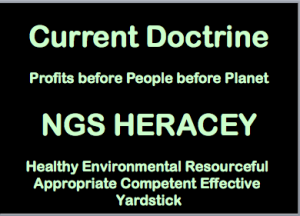
Current Doctrine v NGS Heracey(tm)

GBE HeraceyTM
© GBE GBC GRC GIC GGC GBL NGS ASWS Brian Murphy aka BrianSpecMan ******
2nd March 2026
Benchmarking Building Products Embodied Carbon Guest Post
See Also:
GBE Guest Post
- Digital Data Carbon Footprint (Guest Post) G# 42296
- Access ECO4 (Guest Post) G#42579
- Future of Sustainable Insulation: Natural Materials Over Plastics (Guest Post) G#42605
- Bio-Based Insulation and Its Role in Carbon Reduction (Guest Post) G#42658
- Timber Comeback: Why Engineered Wood Is the Future of Low-Carbon Construction (Guest Post) G#42699
- Hempcrete in Practice: Natural Carbon Storage for Modern Architecture (Guest Post) G#42713
- Decoding Embodied Carbon: A Practical Approach for Architects and Specifiers (Guest Post) G#42715
- Passive Design Strategies for the UK Climate (Guest Post) G#42790
- Retrofitting for Net Zero (Guest Post) G#42801
- Carbon-back Periods (Guest Post) G#43831
- Embodied Carbon Mistakes (Guest Post) G#42864
- Refurbishment as Climate Action (Guest Post) G#42874
- Carbon-back vs Pay-back (Guest post) G#42911
- Reclaimed Reduces Whole life carbon (Guest Post) G#42916
- Low-Carbon Material HERACEY Screening (Guest Post) G#42986
- Solving Construction Waste at Source (Guest Post) G#43325
- Benchmarking Building Product Embodied Carbon (Guest Post) (This post)
GBE Circular
- Circular Economy Action Plan(Publication) G#38180
- Circular Economy ZWS SEDA (Event) G#27448
- Cradle 2 Cradle Circular Economy New Language of Carbon G#14667
GBE HERACEY™
- GBE HERACEY (Jargon Buster) G#1429 N#1399
- GBE HERACEY Healthy (Jargon Buster) G#1896 N#1753
GBE Links
- Wikipedia
- construction industry in the United Kingdom
- SALVO Architectural Salvage (Link) G#1044 N#1061
GBE Other’s Stuff
- Other’s News G#935 N#953
- Other’s Campaigns (Navigation) G#976 N#997
- Other’s Newsletters (Navigation) G#682 N#704
- Other’s Blogs G#906 N#926
- Other’s Surveys G#970 N#991
GBE Brain Dumps
- EcoHomes What does the future look like (Brain Dump) G#40732
- How to Design Sustainably (Brain Dump) G#40730
- MMC Modern Methods of Construction (Brain Dump) G#39443
- Building Performance Aspects (Brain Dump) G#21255
- Product Data Golden Thread (Brain Dump) G#39241
GBE Issue papers
- Overheating (Issue Paper) G#145
GBE CPD Titles
- BREGG Green Materials Olympics short (CPD) G#2096 N#240
- Green or Violet materials Which do you use (CPD) G#15560
- How do GBE Select Products (CPD)
- Jargon Buster Carbon Dioxide (CPD) G#291 N#292
- 57 Carbon and CO2 related terms
- Low Carbon Green Building (CPD)
- Low v High Carbon Lifestyle (CPD) N#307
- Specification Clause Content (CPD) G#371 N#372
- TSB Retrofit for a Future Competition project
- Violet Materials (Materials) G#963 N#983
- Zero Carbon Development Passive Approach (CPD)
© GBE GBC GRC GIC GGC GBL NGS ASWS Brian Murphy aka BrianSpecMan ******
2nd March 2026 – 30th June 2026

Exactly the kind of content I’ve been craving without even knowing it.
Cynthia Hartman
Cynthia Hartman
Thank you for your kind comment.
Our Guest contributor will be pleased to hear it.
Your name from your email address seems to be a better match to your photograph.
I have not included the link to the embryo website.
BrianSpecMan