
Embodied Carbon Mistakes Guest Post
GBE > Advertise > Collaborate > Services > Guest Posts > G#42864
About:
Embodied Carbon Mistakes Guest Post
Embodied Carbon in Buildings: What Designers Still Get Wrong
- Embodied carbon has moved (until it is regulated, is still moving) from a specialist concern to a central design metric in the UK construction sector.
- Regulations, client expectations, and climate science all point in the same direction: the carbon emitted before a building is even occupied now rivals—or in many cases exceeds—the carbon emitted during its operation.
- Yet despite growing awareness, many designers still misunderstand embodied carbon, misapply data, or focus on the wrong priorities.
- These mistakes are not usually intentional; they stem from inherited design habits, cost-driven decision-making, and a lack of whole-life thinking.
- This article explores the most persistent errors designers make when addressing embodied carbon in buildings, why those errors matter, and how design practice must evolve if the industry is serious about reducing environmental impact.
- The focus is educational rather than promotional, aligned with the Green Building Encyclopaedia (GBE) and Green Building Calculator (GBC) aim of improving outcomes across development, construction, refurbishment, and long-term use.
Understanding Embodied Carbon Beyond the Headline
- Embodied carbon refers to the greenhouse gas emissions associated with materials and construction processes across a building’s life cycle—including extraction, processing, manufacture, transport, installation, maintenance, replacement, and end-of-first-use scenarios such as reclaim for reuse, recycling, landfill, or incineration.
- Unlike operational carbon, which accrues gradually during occupation, embodied carbon is largely locked in upfront.
- Once emitted, it cannot be reclaimed.
- Designers often reduce embodied carbon to a single number or a simplistic comparison between materials.
- This reductionist approach is one of the most fundamental errors.
- Embodied carbon is not static; it depends on system boundaries, assumptions about lifespan, maintenance regimes, reuse potential, and demolition v deconstruction strategies.
- A material with higher upfront emissions may outperform a lower-carbon alternative if it can be repaired, retained, or reclaimed and reused across multiple use cycles.
- Failing to think in whole-life terms leads to design decisions that appear sustainable on paper but perform poorly when assessed against genuine environmental criteria.
Mistake 1: Confusing Cost Payback with Carbon Payback
- One of the most common conceptual errors is importing financial payback logic into carbon decision-making.
- Designers frequently justify high-carbon materials or systems by claiming their operational efficiency will “pay back” the initial embodied carbon over time.
This confuses cost payback with carbon payback.
GBE’s emphasis on carbon-back periods highlights why this logic is flawed.
Carbon emitted today causes immediate and irreversible climate impact, whereas projected savings decades later may arrive too late to matter.
Designers still get this wrong by:
- Assuming long operational lifespans without evidence
- Ignoring fit-outs, strip-outs, refits, and refurbishment cycles
- Overestimating real-world energy performance without post-occupancy or service performance data
A lower-carbon, simpler solution that delivers immediate reductions often outperforms a complex, high-embodied-carbon system that promises future efficiency.
This principle applies equally to building fabric and building services.
Mistake 2: Treating Material Substitution as the Main Solution
Material substitution has two very different meanings:
- Design-led substitution to reduce environmental impact
- Installer-led substitution to reduce upfront cost
- Confusing the two is dangerous.
- Designers often assume embodied carbon reduction is achieved by swapping one material for another—frequently late in the design process.
- While specification matters, this approach ignores the most powerful lever available: building less.
The greatest embodied carbon savings usually come from:
- Reusing the existing building, including frames, substructures, basements, and foundations
- Designing more compact, efficient forms rather than larger, material-intensive geometries
- Avoiding unnecessary ceilings, floor finishes, paints, and decorative layers, recognising that exposed finishes demand higher execution quality
- Reducing over-engineering, particularly in structural and foundation design
- Material substitution without design reduction often delivers only marginal gains.
- Worse, it can introduce new risks—such as excessive chemistry, poor indoor air quality, or limited recyclability.
- Past guidance, including early Waste Resource Action Programme (WRAP) initiatives, encouraged higher recycled content but sometimes resulted in materials with missing performance requirements, such as fire resistance or overheating risk; and more chemistry binding the recyclate.
- Substitution without competence undermines both safety and sustainability.
Mistake 3: Over-Reliance on Generic Databases
- Environmental Product Declarations (EPDs) and embodied carbon databases are essential tools—but only when used critically.
- Designers frequently rely on generic data in the absence of product-specific information, without understanding its limitations.
Common errors include:
- Using sector-average data that does not represent real products in the market
- Relying on UK-wide generic datasets (such as historic sector averages) that allow high-impact products to hide behind neutral values
- Ignoring transport modes, distances, and logistics chains—including land, sea, air, and inter-modal transfers
- Comparing products with incompatible functional units
- Comparing EN 15804 based EPD in Amendment 1 & 2 formats that shoud not be read together, leaving us in a 5 year period of limbo until all are 2nd format.
- Assuming declared data reflects real-world performance, including speculative assumptions about future circular reuse rather than landfill or incineration
Embodied carbon assessment is only as robust as its assumptions.
- Databases should be treated as decision-support tools, not definitive answers.
- This is where early screening assessments, before full Life Cycle Assessment (LCA) or Environmental Product Declaration (EPD) analysis, play a critical role—helping teams identify high-impact decisions when change is still possible.
- GBE and GBC emphasis on transparent yardsticks, equations, calculators, and open datasets reflects the need for benchmarking that is comprehensive, comparable, honest, and fit for purpose.
Mistake 4: Ignoring Maintenance, Repair, and Replacement
- Many assessments stop at practical completion.
- This truncation ignores decades of maintenance, repair, upgrade replacement, and waste generation, which often dominate embodied carbon over time.
Examples include:
- Short-lived finishes and services requiring frequent replacement or upgrade
- Energy Performance Certificates (EPC) and Display Energy Certificates (DEC) ratings’ intermittent upgrades requiring the improvements to be redone increasing insulation thickness and wasting previous work each time
- Proprietary systems dependent on manufacturer-specific components (for example, sealed façade panels or integrated Mechanical Electrical Plumbing MEP modules)
- Bespoke products that were made in stages in numerous locations generating large transport impacts, especially for single replacement parts
- Assemblies that cannot be repaired without damaging included or adjacent components, triggering wholesale replacement, refinishing, and redecoration
- Insurance repair sector’s incentive to make it a big job worth doing: one broken tile or water leak leading to complete bathroom refit; over-complicated by not taking this trigger-point to upgrade, avoiding uninsured ‘betterment’.
Embodied carbon must also include:
- Materials removed and sent to landfill
- Waste generated by design decisions: —centering = perimeter off-cuts, large-format components = larger offcuts, clashing grids, and complex curvilinear geometries
- Over ordered and never needed materials (EA data claimed £150m/annum)
Buildings designed for access, repair, adaptability, and incremental upgrade consistently outperform those designed purely for initial pristine appearance or lowest capital cost.
Mistake 5: Treating Refurbishment as Second-Best
- In the UK, most of the buildings that will exist in 2050 already stand today.
- Yet refurbishment is still treated as a compromise rather than a strategic opportunity.
- New build is often justified on improved operational performance, while the embodied carbon of demolition and reconstruction is underplayed or excluded altogether. This is a critical error.
Refurbishment and reuse typically deliver:
- Dramatically lower embodied carbon
- Reduced waste and material extraction
- Retention of social, cultural, and economic value
Even at a domestic scale—such as a contractor bathroom remodel—retaining sound structures, layouts, and fittings can significantly reduce embodied carbon compared to full strip-out and replacement.
Mistake 6: Prioritising Cost Over Environmental Effectiveness
- Low cost is frequently mistaken for sustainability. In reality, low initial cost often leads to higher long-term financial and environmental costs.
Examples include:
- PVC vinyl flooring and single-layer roofing with limited durability
- High-chemistry products and high-bond installation methods that prevent reuse
- Systems requiring frequent replacement over the building’s life
True value engineering adds quality rather than stripping it away.
Multi-functional materials, reduced labour activities, and longer service lives often deliver better environmental outcomes and lower lifetime costs, even if material prices appear higher at first glance.
Installing one durable system is usually cheaper—financially and environmentally—than installing two short-lived ones.
Mistake 7: Separating Health from Carbon
- Addressing embodied carbon in isolation creates new risks.
- Materials that appear low-carbon may introduce toxicity, emissions, or health hazards during manufacture, installation, or occupation.
- Healthy materials—low in harmful chemistry and emissions—are more compatible with circular economy principles.
- Materials that are safe to handle, reuse, and recycle tend to have lower whole-life impacts.
- Embodied carbon reduction must be aligned with health, competence, and ethical responsibility, not treated as a standalone metric.
Towards Better Design Practice
To stop getting embodied carbon wrong, designers must shift practice in several key ways:
- Earlier decision-making: Embodied carbon must influence concept design, not just technical stages
- Whole-life thinking: Maintenance, reuse, waste, and end-of-first-use scenarios must be standard considerations
- Refurbishment-first mindset: New build should be the exception, not the default
- Transparent data use: Assumptions must be clear, defensible, and comparable—not green-washed
- Carbon-back prioritisation: Immediate reductions matter more than distant promises
This requires cultural change as much as technical skill.
Initial education, lifelong learning, shared datasets, and open methodologies are essential if the industry is to move beyond superficial compliance.
Embodied Carbon Mistakes Guest Post
Conclusion
- Embodied carbon is not an emerging issue—it is a defining challenge for the built environment.
- Designers continue to get it wrong when decisions are delayed, simplified, or driven by short-term metrics.
- Until regulation—such as Building Regulations Approved Document Z (BRAD-Z)—makes embodied carbon unavoidable, it will remain the domain of those who care, while many are hindered by cost pressure, lack of knowledge, or inability to convince others.
- By embracing whole-life thinking, prioritising reuse, and aligning carbon reduction with health, competence, and resourcefulness, designers can play a decisive role in reducing the environmental impact of buildings.
- The tools already exist—the challenge is using them properly, early, and with intent.
GBE Team Guest Author
Name: Preeth Vinod Jethwani
© GBE GBC GRC GIC GGC GBL NGS ASWS Brian Murphy aka BrianSpecMan ******
7th January 2026
Images:
Embodied Carbon Mistakes Guest Post
GBE Team Guest Author
 Name: Preeth Vinod Jethwani
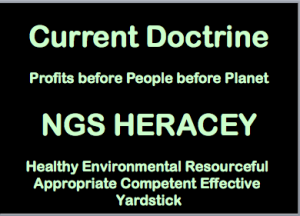
Current Doctrine v NGS Heracey(tm)

GBE HeraceyTM
© GBE GBC GRC GIC GGC GBL NGS ASWS Brian Murphy aka BrianSpecMan ******
7th January 2026 – 27th January 2026
See Also:
Embodied Carbon Mistakes Guest Post
GBE Guest Posts
- Guest Post (Collaborate) G#40818
- Digital Data Carbon Footprint (Guest Post) G# 42296
- Access ECO4 (Guest Post) G#42579
- Future of Sustainable Insulation: Natural Materials Over Plastics (Guest Post) G#42605
- Circular Construction: Designing for Deconstruction and Material Reuse (Guest Post) G#42629
- Eco-Refurbishment: Turning Old Buildings into Energy-Efficient Homes (Guest Post) G#42642
- Bio-Based Insulation and Its Role in Carbon Reduction (Guest Post) G#42658
- Hempcrete in Practice: Natural Carbon Storage for Modern Architecture (Guest Post) G#42713
- Decoding Embodied Carbon: A Practical Approach for Architects and Specifiers (Guest Post) G#42715
- From Waste to Worth: Turning Construction Waste into Circular Materials (Guest post) G#42737
- Designing Airtight Yet Breathable Buildings: Balancing Comfort, Health and Sustainability (Guest Post) G#42769
- Passive Design Strategies for the UK Climate (Guest Post) G#42790
- Retrofitting for Net Zero (Guest Post) G#42801
- Thermal Mass Explained (Guest post) G#42812
- Reclaim, Refurbish, Reuse (Guest Post) G#42816
- The Rise of Material Passports (Guest Post) G#42818
- Circular Construction Starts With Reuse (Guest Post) G#42824
- Carbon-back Periods (Guest Post) G#43831
- Embodied Carbon Mistakes (Guest Post) G#42864
GBE Circular
- Circular Economy Action Plan (Publication) G#38180
- Circular Economy ZWS SEDA (Event) G#27448
- Cradle 2 Cradle Circular Economy New Language of Carbon G#14667
- The Future of Waste Management: Promoting a Circular Economy in the UK (Event) G#13817
- WRAP Demolition Module ICE Demolition Protocol (Information) G#550 N#570
- GBE Reclamation Time (Podcast) G#41960
- GBE Reclamation Hour (Event) G#40562
- Waste and Recycling DTI PII (Project) G#552 N#572
GBE HERACEY™
- GBE HERACEY (Jargon Buster) G#1429 N#1399
- GBE HERACEY Healthy (Jargon Buster) G#1896 N#1753
GBE Links
- Wikipedia
- construction industry in the United Kingdom
- SALVO Architectural Salvage (Link) G#1044 N#1061
GBE Other’s Stuff
- Other’s News G#935 N#953
- Other’s Campaigns (Navigation) G#976 N#997
- Other’s Newsletters (Navigation) G#682 N#704
- Other’s Blogs G#906 N#926
- Other’s Surveys G#970 N#991
GBE Brain Dumps
- EcoHomes What does the future look like (Brain Dump) G#40732
- How to Design Sustainably (Brain Dump) G#40730
- Product Data Golden Thread (Brain Dump) G#39241
GBE Brainstorms
- House NI 1960s EnerPHit Upgrade (Brainstorm) G#16288
- Future Facing Environmental Bathrooms (BrainStorm) G#15701
- Stone Barn Conversion Thermal Insulation (BrainStorm) G#14897
- Improving U values by Substitution (Brainstorm) G#13507
- 3 Houses (Brainstorm) G#7851
- Semi Basement (Brainstorm) G#7393
- Sommerfield One Off House (Brainstorm) G#760 N#782
GBE Issue papers
- Overheating (Issue Paper) G#145
- Urban Risks due to Climate Change (Issue Paper) G#12500
- Indoor Air Quality IAQ (Issue) G#1119 N#1135
GBE Jargon Buster
GBE Collaborate Services
- GBE Guest Post (Collaborate) G#38304
- GBE PASS Product Accessory System Screening (Assessment) G#515 N#533
- GBE BEST Building Element Screening Test (Collaborate) G#514 N#532
- GBC Product Data Collection (Collaborate) G#40086
GBE CPD Topic
- CDP Topic Refurbishment Retrofit (Navigation) G#1451 N#1419
GBE CPD Titles
- A90 Performance Specification (CPD) G#1377 N#1354
- BREGG Green Materials Olympics short (CPD) G#2096 N#240
- Building with Reclaimed Components and Materials G#545 N#565
- I wish Carbon Counting was easy, it is now (CPD) G#40692
- Carbon Counting Calculators (CPD) G#39145
- Design To Reduce Waste (TGR Training) G#404 N#405
- Design to Reduce Waste Diagrams(CPD) G#412 N#413
- Green or Violet materials Which do you use (CPD) G#15560
- Jargon Buster Carbon Dioxide (CPD) G#291 N#292
- 57 Carbon and CO2 related terms
- Low Carbon Green Building (CPD)
- Low Carbon Everything (CPD) G#364 N#365
- Low v High Carbon Lifestyle (CPD) N#307
- Material Exchange 4 Specification (CPD) G#308 N#309
- Overheating (CPD) G#15750
- PASS Product Accessory System Screening (Assessment) G#515 N#533
- Reclaim Product Material Passports (CPD) G#30129
- Reclaim Reuse Specification (CPD) G#316 N#317
- RefurbishmentTSBRetrofitForAFuture (CPD) PDF Show
- Retrofit GreenDeal (CPD) N#339
- Retrofit GreenDeal Risks Rev11 (CPD) N#351
- Retrofit Materials and Methods (CPD)
- Screening Criteria (CPD) G#42156
- Violet Materials (Materials) G#963 N#983
- Waste Cost Reduction (CPD) N#412
- Waste Hierarchy 2011 (CPD) G#414 N#415
- Waste Hierarchy 2012 (CPD) N#416
- Waste Refurbishment Hierarchy (CPD) N#418
- Zero Carbon Development Passive Approach (CPD)
GBE Navigation
- GBE Material Exchange (Navigation) G#912 N#932
- GBE Waste (Navigation) G#39823
Embodied Carbon Mistakes Guest Post
© GBE GBC GRC GIC GGC GBL NGS ASWS Brian Murphy aka BrianSpecMan ******
7th January 2026