

Low-Carbon Material HERACEY™ Screening Guest Post
GBE > Advertise > Collaborate > Services > Guest Posts > G#42986
About:
Comparing Carbon: Low-Carbon Material Selection Using HERACEY™ Principles Screening
Why “Comparing Carbon” Requires Method, Not Rhetoric
“Low-carbon material selection” is frequently discussed but rarely defined with sufficient technical precision. In practice, material choice is often reduced to a single metric—embodied carbon, typically expressed as kilograms of carbon dioxide equivalent per kilogram of material (kgCO₂e/kg). While embodied carbon is essential, it is not sufficient on its own to support environmentally responsible decision-making in buildings, infrastructure, and refurbishment.
This article responds directly to that limitation. It presents a methodical, evidence-led framework for comparing carbon impacts using HERACEY™ principles, as defined by Green Building Encyclopaedia (GBE). The objective is not to promote products or prescribe design outcomes, but to establish a defensible selection logic aligned with UK and EU construction practice, available datasets, and regulatory expectations.
The article anticipates common editorial and professional objections—such as “carbon data is inconsistent,” “low-carbon materials underperform,” or “heritage and durability concerns override carbon goals”—and addresses them explicitly using transparent reasoning and verifiable data.
It is also important to recognise that material selection never occurs in isolation. Design and specification decisions must balance essential performance requirements, regulatory compliance, cost, client needs, architectural intent, aesthetics, and environmental impact. Carbon comparison must therefore operate as part of a multi-criteria decision framework, not as a single-point optimisation.
Defining Key Technical Concepts (No Assumptions)
Embodied Carbon
Embodied carbon is the sum of greenhouse gas emissions associated with material extraction, processing, manufacture, transport, installation, maintenance, replacement, and end-of-life (end of first use) stages. It is assessed using Life Cycle Assessment (LCA) and reported in kgCO₂e.
In UK practice, embodied carbon is commonly calculated using:
- EN 15804:2012 +A1:2013 and +A2:2019 Environmental Product Declarations
- ISO 14040 and ISO 14044 (LCA framework and principles)
- BS EN 16449:2014 (biogenic carbon in wood products)
- RICS Whole Life Carbon for the Built Environment (both editions)
Any comparison not grounded in these standards lacks technical credibility.
Operational Carbon
Operational carbon refers to emissions from energy use during a building’s occupation phase. While critically important, it is outside the primary scope of this article, except where material choice directly affects operational demand—for example through thermal conductivity, thermal mass, moisture buffering, or airtightness performance.
Carbon-Back Period
A carbon-back period is the time required for a material, product, or system to offset its embodied carbon through operational savings or avoided future emissions. GBE prioritises carbon-back over financial payback because it reflects climate impact rather than cost efficiency.
Low-Carbon and Low-Impact Materials
A low-carbon material is not simply one with lower embodied carbon than a conventional alternative. A more accurate term is often low-impact material. To qualify, a material must:
- Avoid transferring impact to other life-cycle stages
- Avoid reliance on petrochemicals where viable alternatives exist
- Be compatible with realistic circular economy pathways
This definition aligns directly with HERACEY™ principles.
HERACEY™ as a Selection Framework, Not a Label
HERACEY™ is not a certification scheme or marketing badge. It is a multi-criteria decision framework used to test whether a material contributes positively to sustainable construction outcomes.
HERACEY™ Components (Defined)
- Healthy: Non-toxic manufacture, safe installation, and benign indoor air quality
- Environmental: Low embodied carbon, energy, water use, and chemical load
- Resourceful: Enables reuse, repair, recycling, or biodegradation
- Appropriate: Fit for purpose, context-specific, and technically suitable
- Competent: Tested, certified, and supported by reliable data
- Effective: Delivers meaningful performance outcomes, not marginal gains
- Yardstick: Enables benchmarking, calculation, and comparison
A material may be “low carbon” in isolation yet fail one or more HERACEY™ criteria, and therefore fail GBE’s definition of sustainability.
Why Single-Metric Carbon Comparison Is Technically Insufficient
Editorial Objection Anticipated
“If embodied carbon is low, why complicate the decision?”
Evidence-Based Response
Single-metric comparison ignores impact displacement. For example:
- A material with low manufacturing carbon may require frequent replacement.
- Another may reduce embodied carbon but introduce high chemical toxicity.
- Some low-carbon materials increase moisture risk, leading to premature failure.
Whole-life carbon assessments consistently demonstrate that durability, compatibility, and maintenance frequency materially affect total emissions.
Carbon comparison must therefore be contextual and system-based, not absolute.
Comparative Carbon Evaluation Using HERACEY™ Principles
Mineral-Based Materials (e.g., Lime vs OPC Cement)
Ordinary Portland Cement (OPC / CEM I) is excluded from GBE promotion due to its high embodied carbon and unavoidable process emissions.
By contrast:
- Hydraulic and non-hydraulic limes exhibit significantly lower embodied carbon.
- Lime carbonation partially reabsorbs CO₂ during curing.
- Lime mortars enable repair rather than demolition, extending building life.
- Lime mortars allow deconstruction and reclamation of masonry units.
HERACEY™ Evaluation:
- Healthy: Low VOCs and vapour permeability (with appropriate handling to manage alkali exposure)
- Environmental: Lower carbon and reduced chemical intensity
- Resourceful: Reversible, recyclable, supports reuse
- Appropriate: Particularly suited to historic and solid-wall construction
- Yardstick: Supported by EPDs and BRE datasets
Bio-based materials can demonstrate net biogenic carbon storage, temporarily removing CO₂ from the atmosphere until end-of-life treatment.
HERACEY™ requires scrutiny of:
- Source certification (FSC, PEFC, chain of custody)
- Treatment chemistry
- End-of-first-use scenarios
For example:
- Untreated or minimally treated timber performs strongly across HERACEY™ criteria.
- However, competent design and workmanship are essential.
- Timber reliant on petrochemical preservatives may fail Healthy and Environmental criteria despite low carbon values.
Carbon, Water, and Chemistry: Interlinked Metrics
Editorial Objection Anticipated
“Carbon is the priority—why introduce water and chemistry?”
Evidence-Based Response
Water use and chemical intensity are strongly correlated with carbon emissions and ecological harm. High-temperature industrial processes typically require:
- Large water volumes
- Chemical additives
- Fossil fuel energy
Materials with low embodied carbon but high chemical toxicity externalise health and remediation costs. Emerging GBC calculators now recognise this and are expanding to address embodied water and chemistry alongside carbon. HERACEY™ integrates these metrics to prevent false positives in carbon comparison.
Carbon-Back Periods vs Payback Periods
Financial payback prioritises:
- Reduced capital cost
- Faster return on investment
Carbon-back prioritises:
- Avoided future emissions
- Longevity and adaptability
- Reduced replacement frequency
For example, a breathable wall build-up using lime and bio-based insulation may involve slightly higher upfront labour costs but delivers substantially lower maintenance emissions and a service life exceeding 100 years.
From a carbon perspective, this is demonstrably superior.
Addressing Performance and Risk Concerns
Editorial Objection Anticipated
“Low-carbon materials compromise performance or compliance.”
Evidence-Based Response
This concern typically arises from:
- Inappropriate design or specification
- Lack of installer competence
- Use outside intended technical context
HERACEY™ does not promote universal substitution.
It requires appropriateness—meaning structural, hygrothermal, fire, durability, and regulatory performance must be demonstrably achieved.
Low-carbon does not mean low-performance; it means equivalent or superior performance achieved with lower environmental cost.
The Role of Yardsticks: Making Comparison Auditable
To be acceptable within GBE scope, carbon comparison must be:
- Quantifiable
- Repeatable
- Transparent
Acceptable yardsticks include:
- EN 15804-compliant EPDs
- RICS Whole Life Carbon benchmarks
- Open, unlocked datasets
- BRE Green Guide classifications (used with caution and context)
Materials without verifiable data fail the Competent and Yardstick criteria regardless of claims.
Implications for Design, Specification, and Refurbishment
Low-carbon material selection using HERACEY™ principles results in:
- Fewer incompatible assemblies
- Reduced premature failure
- Improved indoor environmental quality
- Lower whole-life carbon emissions
This approach is particularly relevant to:
- Retrofit and refurbishment
- Heritage buildings
- Long-life public infrastructure
- Social housing and community assets
Conclusion: Comparing Carbon Requires Governance, Not Guesswork
Comparing carbon is not a branding exercise or a spreadsheet shortcut. It is a governance challenge requiring:
- Defined criteria
- Transparent data
- Context-specific judgement
HERACEY™ provides a structured, evidence-led method for low-carbon material selection aligned with GBE’s educational mission and the UK’s climate responsibilities.
By integrating health, environmental impact, resource efficiency, competence, and measurable outcomes, it prevents carbon reduction from becoming another form of unintended harm.
Low-carbon materials are not inherently sustainable.
Sustainable materials are demonstrably low-carbon within a wider system of accountability.
GBE Team
Guest Author
Name: Preeth Vinod Jethwani
Editor: BrianSpecMan
© GBE GBC GRC GIC GGC GBL NGS ASWS Brian Murphy aka BrianSpecMan ******
7th February 2026
Images:
GBE Team
Guest Author

Name: Preeth Vinod Jethwani
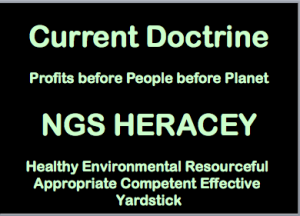
Current Doctrine v NGS Heracey(tm)
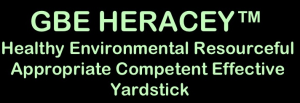
GBE HeraceyTM
© GBE GBC GRC GIC GGC GBL NGS ASWS Brian Murphy aka BrianSpecMan ******
7th February 2026
See Also:
GBE Guest Posts
- Sustainable Renovation Process (Guest Post) G#42350
- Digital Data Carbon Footprint (Guest Post) G# 42296
- Access ECO4 (Guest Post) G#42579
- Future of Sustainable Insulation: Natural Materials Over Plastics (Guest Post) G#42605
- Circular Construction: Designing for Deconstruction and Material Reuse (Guest Post) G#42629
- Eco-Refurbishment: Turning Old Buildings into Energy-Efficient Homes (Guest Post) G#42642
- Bio-Based Insulation and Its Role in Carbon Reduction (Guest Post) G#42658
- Beyond Bamboo: Exploring Rapidly Renewable Materials for UK Builders (Guest Post) G#42694
- Timber Comeback: Why Engineered Wood Is the Future of Low-Carbon Construction (Guest Post) G#42699
- Hempcrete in Practice: Natural Carbon Storage for Modern Architecture (Guest Post) G#42713
- Decoding Embodied Carbon: A Practical Approach for Architects and Specifiers (Guest Post) G#42715
- Designing Airtight Yet Breathable Buildings: Balancing Comfort, Health and Sustainability (Guest Post) G#42769
- Passive Design Strategies for the UK Climate (Guest Post) G#42790
- Retrofitting for Net Zero (Guest Post) G#42801
- Thermal Mass Explained (Guest post) G#42812
- Reclaim, Refurbish, Reuse (Guest Post) G#42816
- The Rise of Material Passports (Guest Post) G#42818
- Circular Construction Starts With Reuse (Guest Post) G#42824
- Carbon-back Periods (Guest Post) G#43831
- Embodied Carbon Mistakes (Guest Post) G#42864
- Refurbishment as Climate Action (Guest Post) G#42874
- Carbon-back vs Pay-back (Guest post) G#42911
- Reclaimed Reduces Whole life carbon (Guest Post) G#42916
- Calculating Embodied Carbon Without Greenwash (Guest Post) G#42982
- Low-Carbon Material HERACEY™ Screening (Guest Post) G#42986 (this post)
GBE Circular
- Circular Economy Action Plan(Publication) G#38180
- Circular Economy ZWS SEDA (Event) G#27448
- Cradle 2 Cradle Circular Economy New Language of Carbon G#14667
- The Future of Waste Management: Promoting a Circular Economy in the UK (Event) G#13817
- WRAP Demolition Module ICE Demolition Protocol (Information) G#550 N#570
- GBE Reclamation Time (Podcast) G#41960
- GBE Reclamation Hour (Event) G#40562
- Waste and Recycling DTI PII (Project) G#552 N#572
GBE HERACEY™
- GBE HERACEY (Jargon Buster) G#1429 N#1399
- GBE HERACEY Healthy (Jargon Buster) G#1896 N#1753
GBE Links
- Wikipedia
- construction industry in the United Kingdom
- SALVO Architectural Salvage (Link) G#1044 N#1061
GBE Other’s Stuff
- Other’s News G#935 N#953
- Other’s Campaigns (Navigation) G#976 N#997
- Other’s Newsletters (Navigation) G#682 N#704
- Other’s Blogs G#906 N#926
- Other’s Surveys G#970 N#991
GBE Brain Dumps
- EcoHomes What does the future look like (Brain Dump) G#40732
- How to Design Sustainably (Brain Dump) G#40730
- MMC Modern Methods of Construction (Brain Dump) G#39443
- Building Performance Aspects (Brain Dump) G#21255
- Blockchain Timber Chain of Custody (Brain Dump) G#20312
- Product Data Golden Thread (Brain Dump) G#39241
GBE Brainstorms
- House NI 1960s EnerPHit Upgrade (Brainstorm) G#16288
- Future Facing Environmental Bathrooms (BrainStorm) G#15701
- Stone Barn Conversion Thermal Insulation (BrainStorm) G#14897
- Improving U values by Substitution (Brainstorm) G#13507
- 3 Houses (Brainstorm) G#7851
- Semi Basement (Brainstorm) G#7393
- Sommerfield One Off House (Brainstorm) G#760 N#782
GBE Issue papers
- Overheating (Issue Paper) G#145
- Squashed Loft Insulation (Issue Paper) G#13919
- Urban Risks due to Climate Change (Issue Paper) G#12500
- Phthalates in PVC Flooring Profiles (Issue Paper)
- Biophilic Design (Issue) G#16587
- Indoor Air Quality IAQ (Issue) G#1119 N#1135
GBE CPD Topic
- CDP Topic Refurbishment Retrofit (Navigation) G#1451 N#1419
GBE CPD Titles
- BREGG Green Materials Olympics short (CPD) G#2096 N#240
- Building with Reclaimed Materials
- Commercial Green Part 2 (CPD) N#254
- Community Low Carbon Lifestyle (CPD) N#258
- Green or Violet materials Which do you use (CPD) G#15560
- How do GBE Select Products (CPD)
- Jargon Buster Carbon Dioxide (CPD) G#291 N#292
- 57 Carbon and CO2 related terms
- Low Carbon Green Building (CPD)
- Low v High Carbon Lifestyle (CPD) N#307
- Material Exchange 4 Specification (CPD) G#308 N#309
- PASS Product Accessory System Screening (Assessment) G#515 N#533
- Reclaim Product Material Passports(CPD) G#30129
- Reclaim Reuse Specification (CPD) G#316 N#317
- RefurbishmentTSBRetrofitForAFuture (CPD) PDF Show
- Retrofit GreenDeal (CPD) N#339
- Retrofit GreenDeal Risks Rev11 (CPD) N#351
- Retrofit Materials and Methods (CPD)
- TSB Retrofit for a Future Competition project
- Violet Materials (Materials) G#963 N#983
- Zero Carbon Development Passive Approach (CPD)
GBE Navigation
- GBE Material Exchange (Navigation) G#912 N#932
- GBE Waste (Navigation) G#39823
© GBE GBC GRC GIC GGC GBL NGS ASWS Brian Murphy aka BrianSpecMan ******
7th February 2026
